





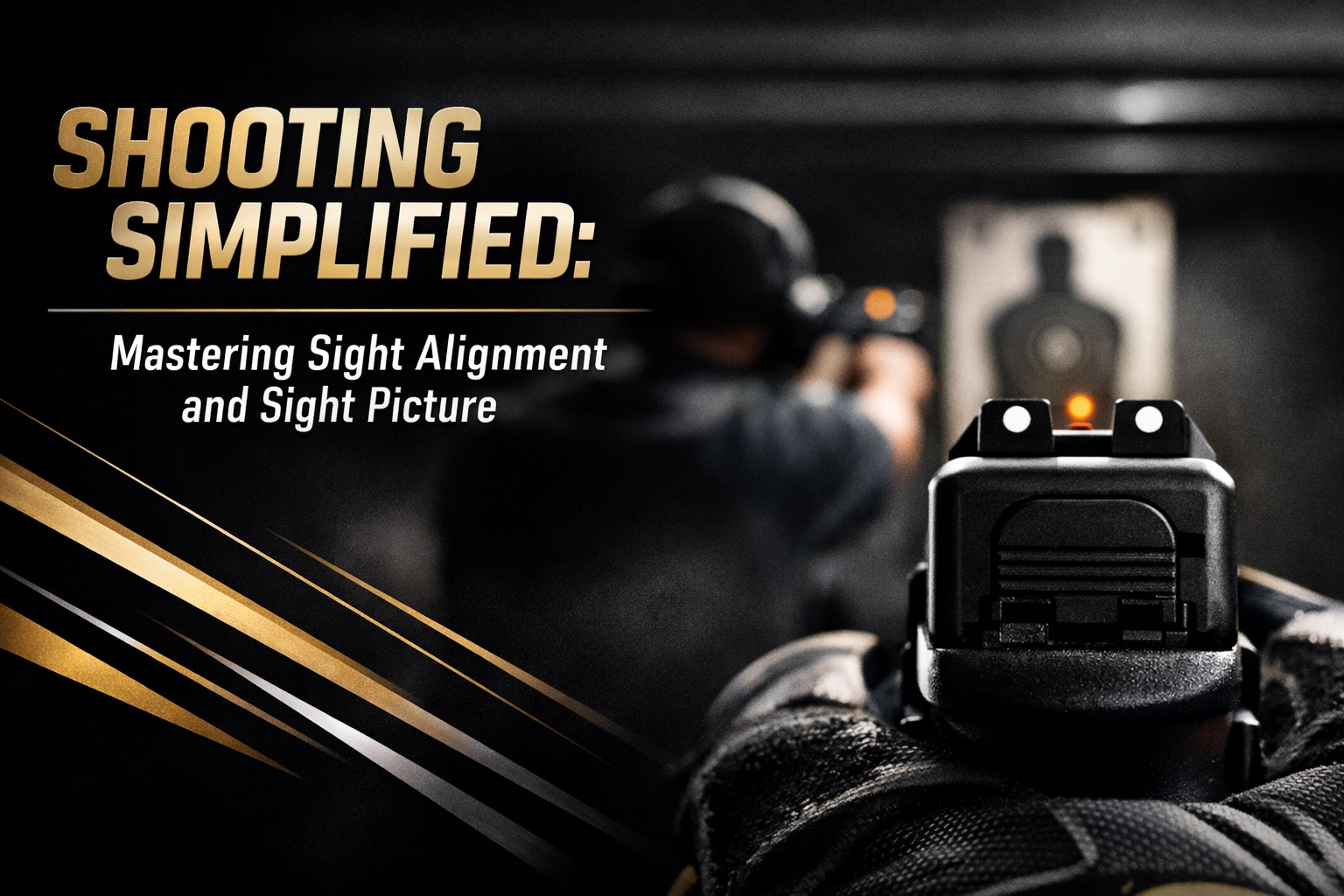
Welcome back to The Protector’s Perspective. I’m Chris Goemans, and if you’ve been following our Shooting Simplified series, you’ve already started building a solid foundation with grip and stance. This is the third installment of the series. But let’s be real: you can have the most rock-solid stance in the world and a grip like a vice, but if your sights aren't pointing where they need to be, you’re just making noise.
Navigating the world of marksmanship can sometimes feel like an uphill battle. You’re at the range, you’re doing everything the "YouTube experts" told you to do, yet your groups look like a shotgun pattern. It’s frustrating, and I get it. At C\&G Solutions, we see students every day in our nys 18-hour pistol course who struggle with the same thing: connecting what their eyes see to where the bullet actually goes.
Today, we’re stripping away the jargon and focusing on the two most critical mechanical steps to hitting your target: Sight Alignment and Sight Picture.
Most people think that aiming is just "pointing the gun at the target." In reality, aiming starts long before you even look at the target. It starts with Sight Alignment.
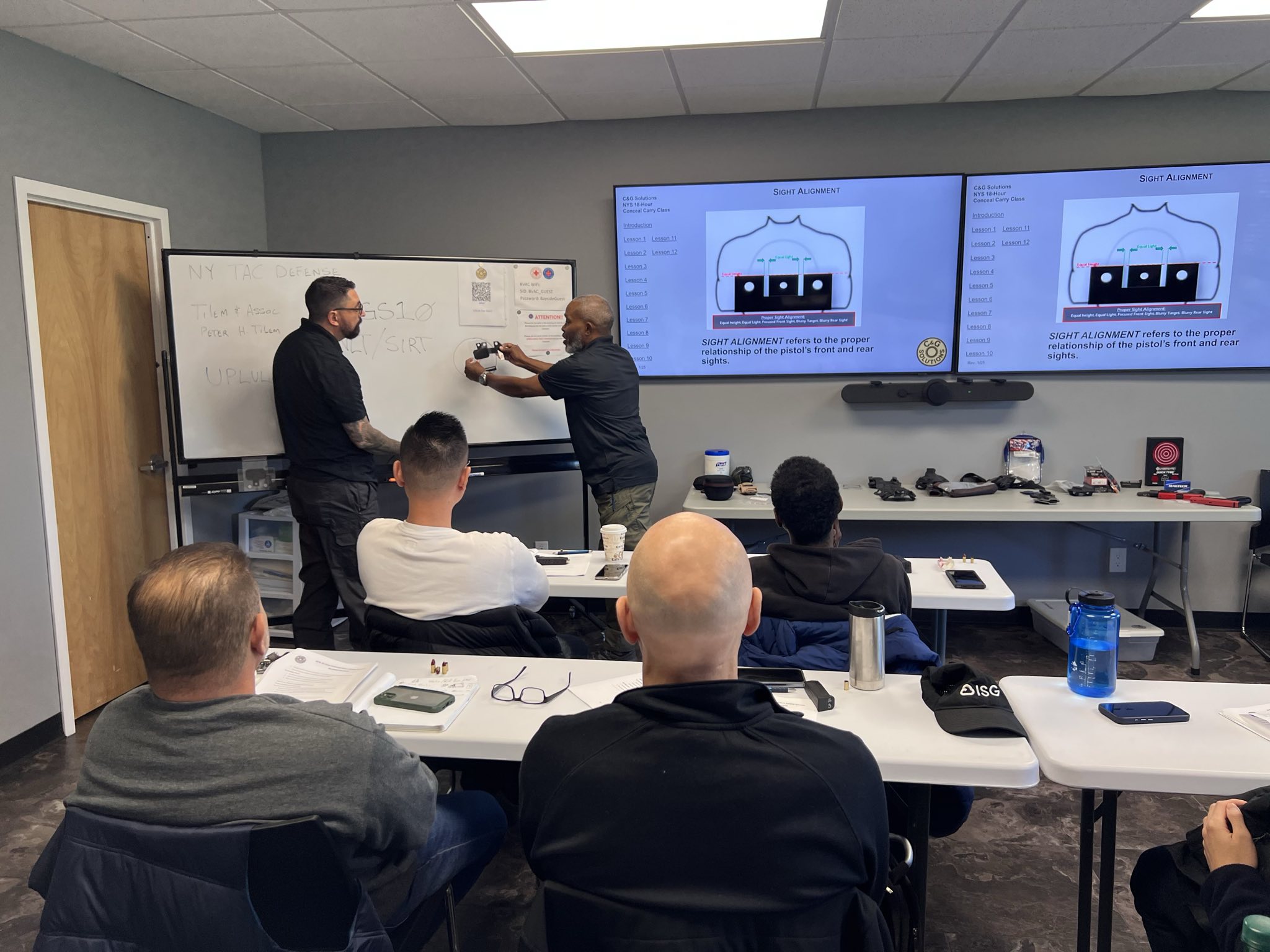
Sight alignment is the relationship between your front sight and your rear sight. This is purely mechanical and has nothing to do with the target itself. If you’re using standard "iron sights," you’re looking for what we call "Equal Height, Equal Light."
It sounds simple, right? But here’s the kicker: even a tiny deviation: we’re talking 1/100th of an inch at the slide: can result in a miss of several inches or even feet by the time the bullet travels 15 or 25 yards. Precision matters.
Once you have your sights aligned with each other, you need to place that "package" onto the target. This is your Sight Picture.
Think of sight alignment as the "math" and sight picture as the "application." You take your perfectly aligned sights and overlay them on the center of your target. However, this is where most shooters run into a biological hurdle: the human eye physically cannot focus on three things at different distances at the same time. You have the rear sight (closest), the front sight (middle), and the target (farthest).
If you try to focus on the target, your sights become a blurry mess, and you’ll likely misalign them without realizing it. This leads to "target fixation," a common mistake where the shooter is so focused on the threat or the bullseye that they forget the tools required to hit it.
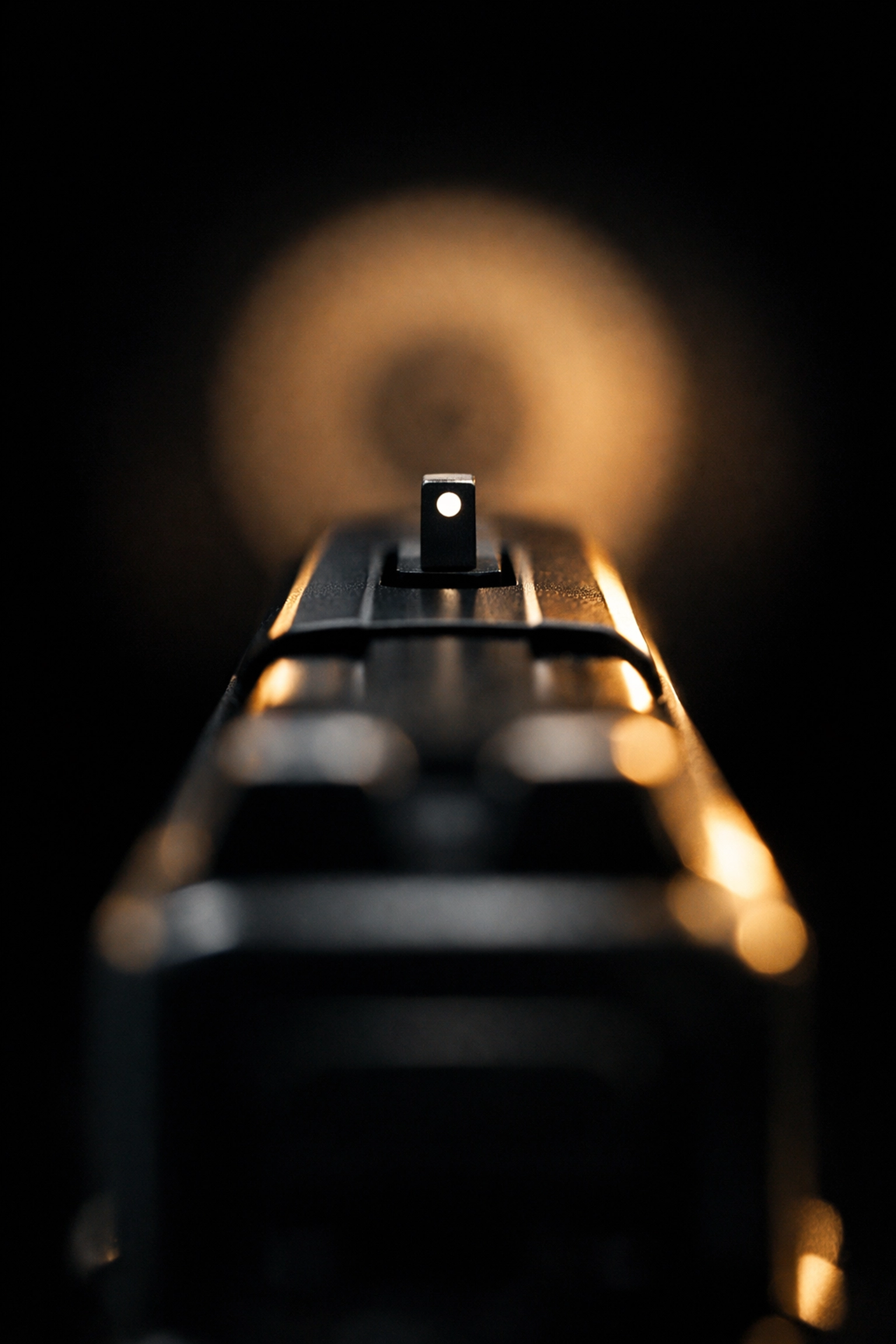
If you take only one thing away from this installment of Shooting Simplified, let it be this: Focus on the front sight.
When you are ready to deliver a shot, your eye should be focused sharply on the front sight post. The rear sight will be slightly blurry, and the target will be slightly blurry. By focusing on the front sight, you ensure that your sight alignment remains perfect at the moment of ignition.
This is a core pillar of our firearm safety course nyc. We spend a significant amount of time at our training headquarters: located at Mariners Cove, 3615 Oceanside Road, Oceanside, NY: working on this exact visualization. Whether you are a brand-new shooter or a seasoned pro, the physics of the human eye don't change.
Even with the right knowledge, execution under pressure can be a maze of errors. Here are a few things that usually trip people up:
The "Peek-a-Boo": This is when a shooter fires and immediately drops the gun or lifts their head to see where the bullet hit. This usually happens before* the bullet has even left the barrel, causing the shot to go low. Stay on the sights!
You can have the perfect sight alignment and a crystal-clear sight picture, but if you jerk the trigger, you’ve wasted the effort. At C\&G Solutions, we teach you to press the trigger to the rear.
Notice I didn't say "squeeze." When you squeeze, your entire hand tends to contract, which pulls the muzzle off-target. When you press the trigger straight to the rear with only the index finger, you keep those sights perfectly aligned until the shot breaks. It’s about isolating that one finger while the rest of your hand maintains a firm, consistent grip.
At our facility in Mariners Cove, we conduct the lecture and dry-fire portions of our training in a safe, controlled classroom environment. This is where you build the muscle memory without the distraction of noise and recoil. We use non-firing training aids and laser systems to show you exactly how your sight alignment fluctuates as you move the trigger.
However, dry-fire is only half the battle. Once you’ve mastered the mechanics in the classroom, we move to specific range facilities for the live-fire portion of the training. This is where the rubber meets the road.
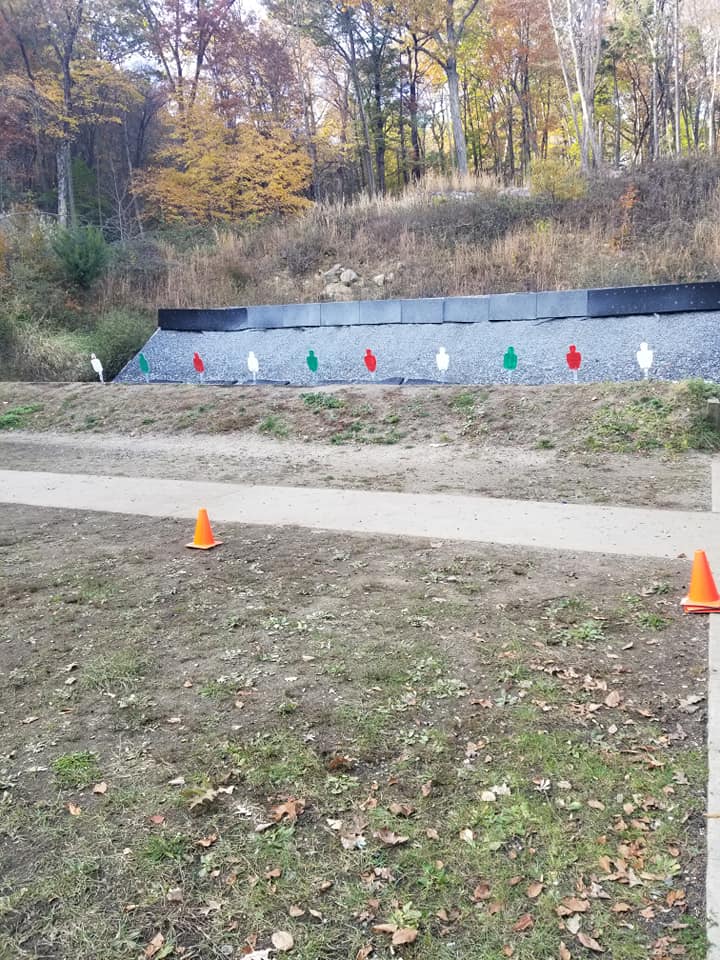
During the live-fire qualification of the nys 18-hour pistol course, you’ll see how maintaining that front sight focus under the stress of recoil is the difference between passing and failing. It’s a serious responsibility, and we treat it as such.
If you’re feeling overwhelmed, don't worry. This is a journey, and every expert was once a beginner staring at a set of blurry sights. The key is to break it down into digestible steps:
This process is what leads to true confidence. When you know why you missed a shot, you have the power to fix it. That’s the "clear, reliable path" we promise at C\&G Solutions.
You don’t need to be at the range to practice this. (Always ensure your firearm is unloaded, no ammunition is in the room, and you are following all safety protocols).
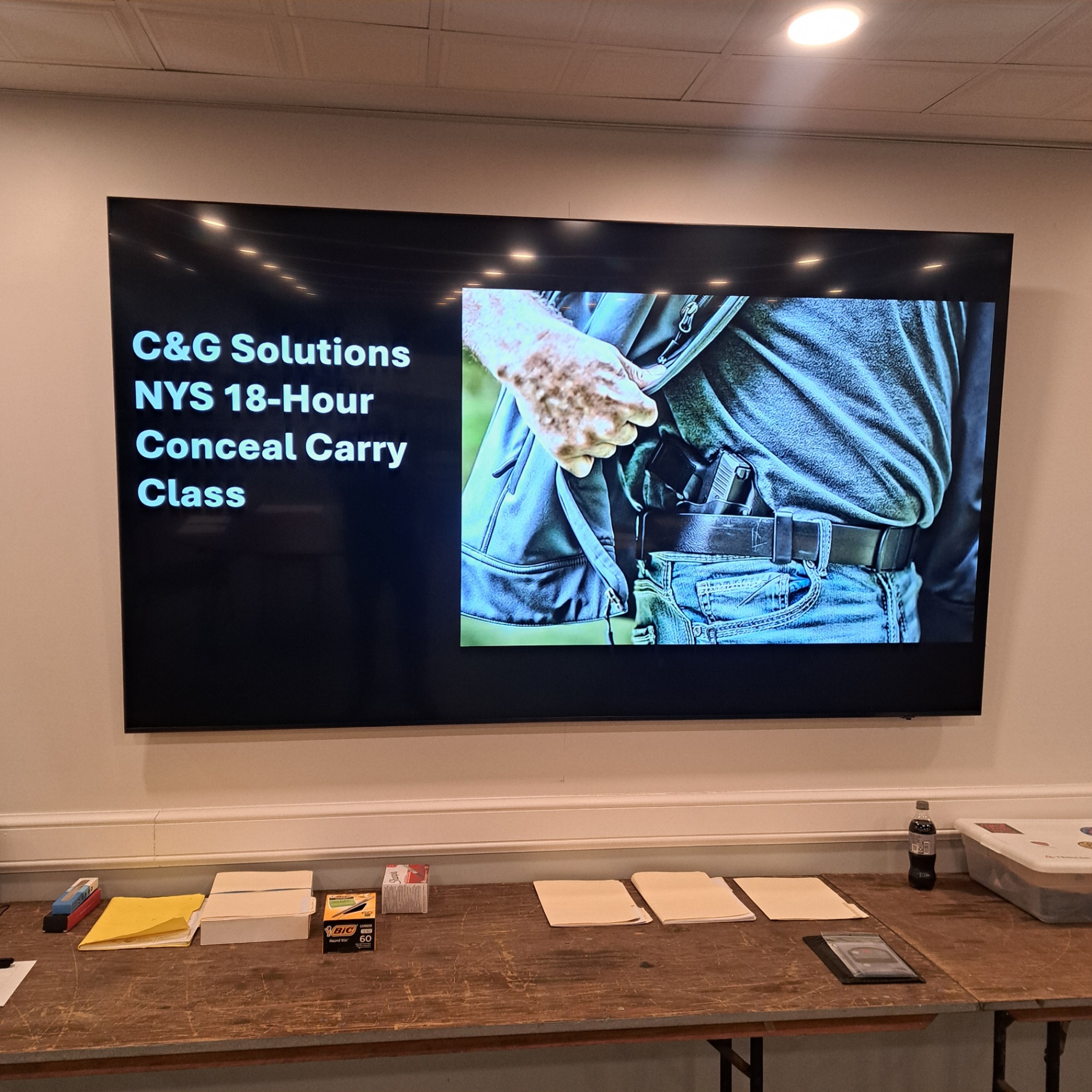
Whether you’re looking to fulfill the requirements for your permit or you want to take your skills to the next level with our Half-Day Pistol Fundamentals or even our Citizen First Responder course for medical emergencies, we’re here to support you.
Training shouldn't be a judgment-free zone: it should be an empowering journey where you gain the skills necessary to protect what matters most.
In real-life scenarios, your heart rate will be up and your adrenaline will be pumping. You won’t have time to "think" about sight alignment; it has to be second nature. That’s why we train. That’s why we focus on the boring stuff until it becomes instinctive.
Stay tuned for our next installment, where we’ll dive deeper into the physics of the trigger and how to master the "reset." Until then, keep practicing that front sight focus.
Defend with skill, Act with confidence.
Found this training tip helpful? Share it with your colleagues and fellow shooters to help spread the word on safety!

Well-Taught, Well-Trained
Safety always comes first. We teach proper firearm handling to help prevent accidents and encourage responsible ownership.