




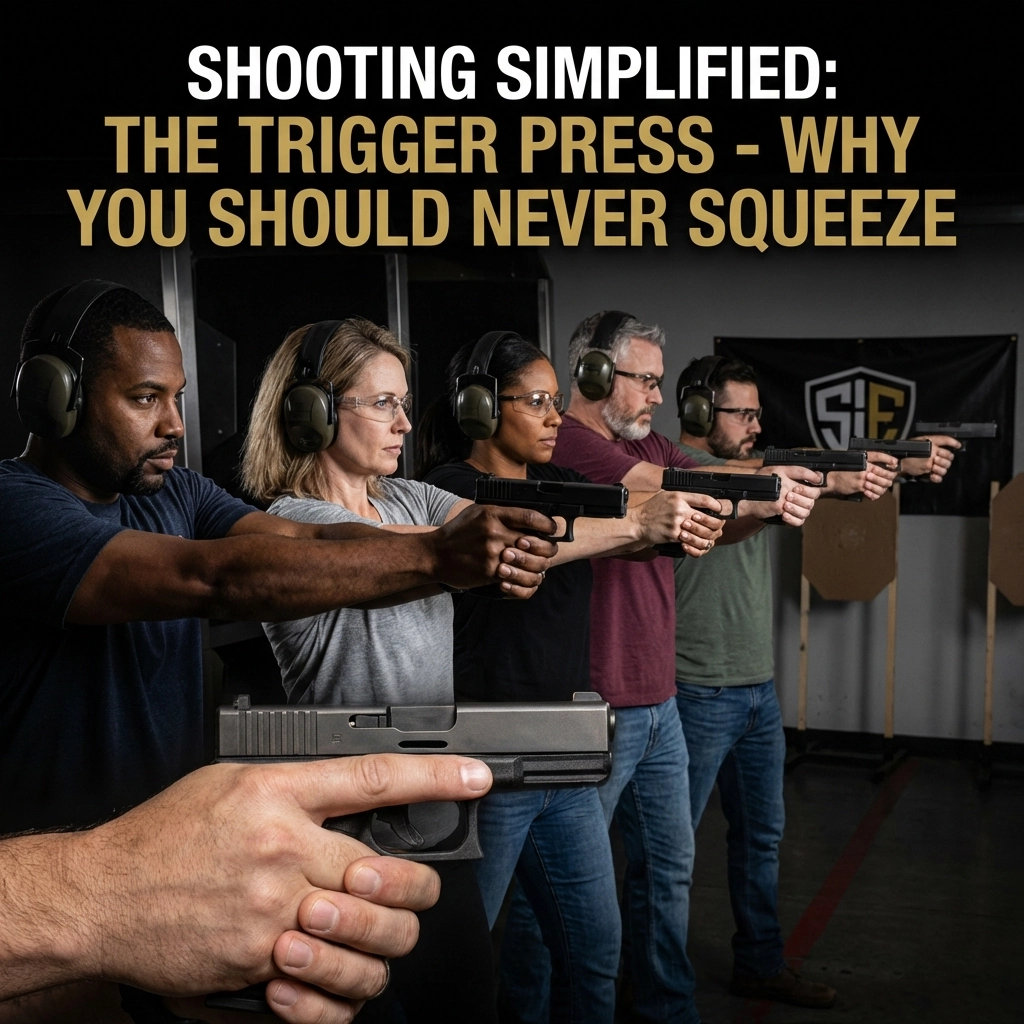
Welcome back to the fourth installment of our series, Shooting Simplified: Mastering the Fundamentals. If you’ve been following along, you’ve already started building a solid foundation. We’ve covered mindset, stance, and grip. Now, we’re moving into the "make or break" moment of every shot: the trigger press.
For many new permit holders in NYC and Nassau County, the journey to becoming a proficient shooter can feel like an uphill battle. You’ve navigated the maze of paperwork, waited months for your license, and finally have your firearm. But when you get to the range, your shots aren't landing where you want them. You’re aiming straight, but the holes in the paper are low, left, or just inconsistent.
If that sounds like you, don’t worry, you aren't alone. Most of the time, the culprit isn't your eyes or your gun; it’s your finger. Specifically, it’s how you’re moving that trigger, Press, don’t squeeze.
In this post, we’re going to break down exactly why "squeezing" is the enemy of accuracy and how mastering the deliberate, isolated press will change your shooting game forever.
Before we get into the mechanics, we need to take a look at the bigger picture. At C\&G Solutions, we believe that owning a firearm is a massive responsibility. It isn't just about hitting a bullseye; it’s about the "30,000-foot view" of safety and legal accountability.
Every time you place your finger on that trigger, you are making a life-altering decision. This is why we focus so heavily on safety in our NYC CCW 18-hour class. You are responsible for every round that leaves your barrel until it comes to a complete stop.
Mastering the trigger press isn't just about being a "good shot", it’s about ensuring that if you ever have to defend yourself, you are precise, controlled, and acting with total confidence.
You’ve probably heard the phrase "squeeze the trigger" in movies or from well-meaning friends. It sounds gentle, right? But in the world of professional firearms training, "squeeze" is a dirty word.
When you tell your brain to "squeeze," your hand reacts by contracting as a whole unit. Think about squeezing a stress ball or a lemon. Your four fingers and your thumb all move inward together. If you do this while holding a pistol, those bottom three fingers, the ones providing your grip, will tighten up right as the gun fires. This "milking" of the grip pulls the muzzle of the gun down and usually to the left (for right-handed shooters).
The result? You’ve just moved the gun right before the bullet left the barrel. Even a movement of a single millimeter at the muzzle can result in a miss of several inches at just seven yards.
Instead of a squeeze, we want a press.
A press is a deliberate, isolated movement of the index finger while the rest of the hand stays absolutely still. Imagine your hand is a vice, firmly holding the firearm in place. Your index finger is a separate tool that moves independently of that vice.
When you press the trigger to the rear, you are applying smooth, constant pressure in a straight line back toward your face. By isolating this movement, you ensure that the sights remain perfectly aligned on the target until the moment the shot breaks.
So, how do we actually do it? Let’s break it down into digestible steps.
Position the "pad" of your index finger (the fleshy part between the tip and the first joint) on the center of the trigger. If you put too much finger in (using the joint), you’ll likely pull the gun toward you. If you use just the tip, you might push the gun away. Find that "sweet spot" in the middle.
This is the hardest part for new shooters. Your middle, ring, and pinky fingers should maintain a firm, consistent grip on the frame. They should not move, tighten, or relax when your index finger starts to work.
Think of the trigger as having a specific weight. Let’s say it’s a five-pound trigger. You don't want to hit it with all five pounds at once. Instead, think of it as a gradual buildup: one pound, two pounds, three pounds... until the gun fires.
Ideally, the shot should almost be a surprise. If you find yourself flinching or anticipating the "bang," you're likely jerking the trigger rather than pressing it. By applying steady, continuous pressure, you allow the mechanical break to happen naturally without your body trying to "help" the gun fire.
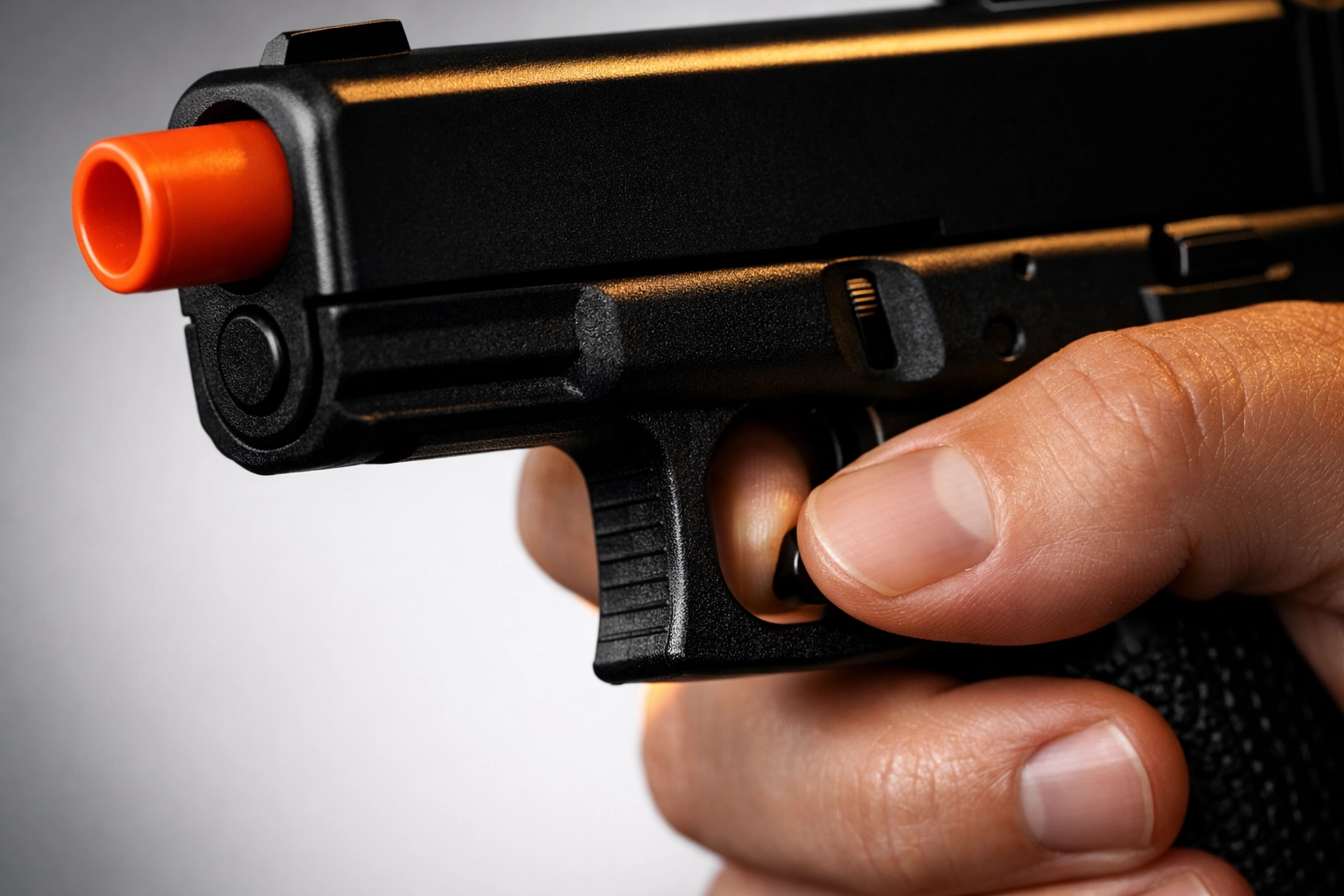
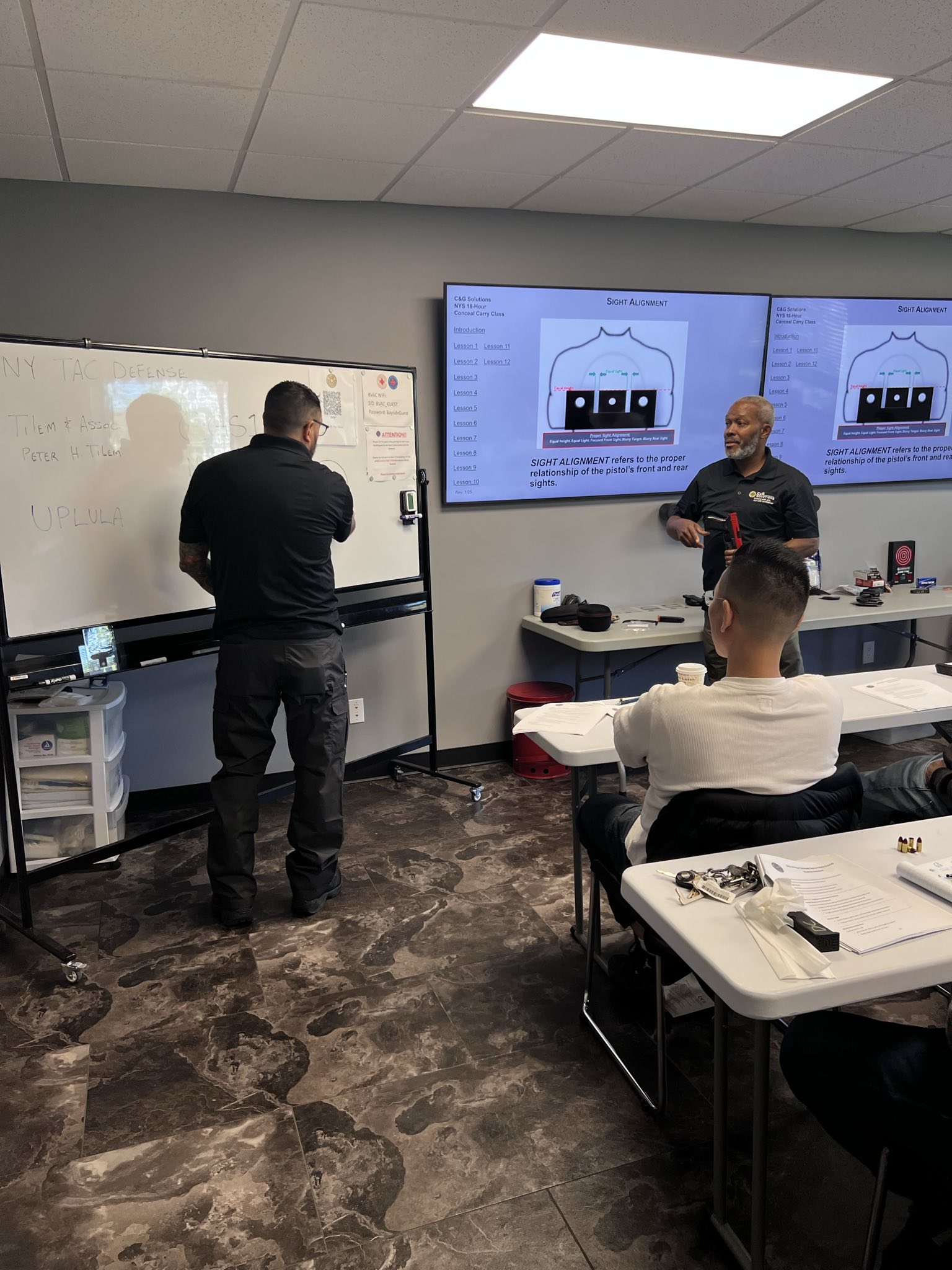
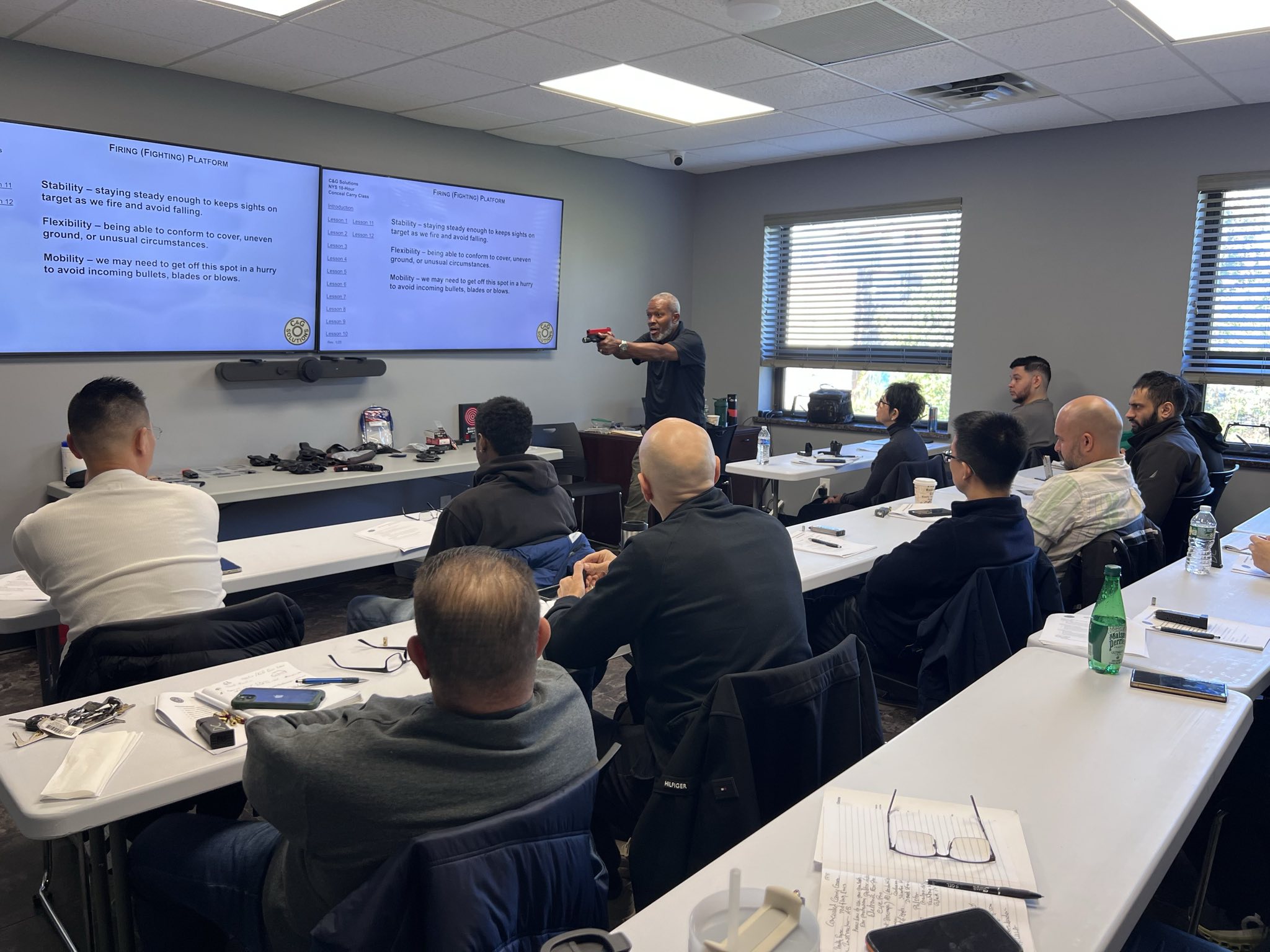
One of the best ways to master this is through dry-fire practice (practicing with an unloaded firearm in a safe environment). At C\&G Solutions, we conduct the classroom and dry-fire portions of our training at Mariners Cove, 3615 Oceanside Road, Oceanside, NY.
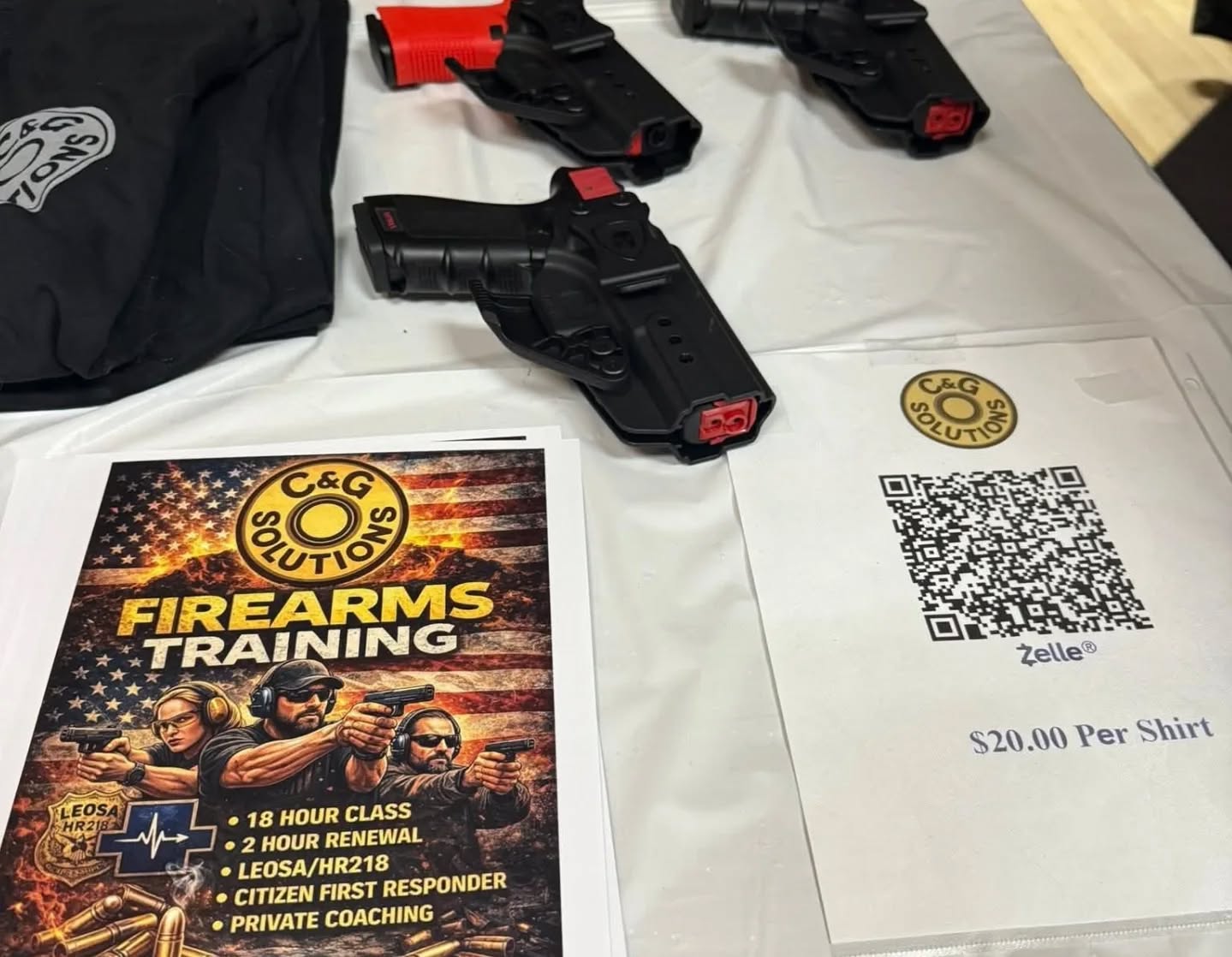
This environment allows us to use training aids and non-firing pistols to ensure you understand the mechanics before you ever head to the range for live fire. It’s a judgment-free zone where you can focus on the movement of your finger without the distraction of noise or recoil.
Once you’ve mastered the isolation of the finger at Mariners Cove, we take those skills to separate ranges for live-fire qualifications. This transition ensures that when you finally do hear that "bang," your fundamentals are so rock-solid that the recoil doesn't disrupt your accuracy.
Even experienced shooters fall into bad habits. Here are a few things to watch out for:
If you find yourself struggling with these, it might be time for some Private Pistol Coaching. Sometimes, ten minutes with a pro like Chris can fix a habit that you’ve been struggling with for months.
While we spend a lot of time talking about how to put holes in things, we also care deeply about how to save lives. Part of the responsibility of being a skilled shooter is knowing how to handle the aftermath of an emergency.
Whether it’s a range accident or a medical emergency in public, we highly recommend our Citizen First Responder course. Being a responsible citizen means being prepared for every scenario, not just the ones involving a firearm.
Mastering the trigger press is a journey, not a destination. It takes practice, patience, and a willingness to unlearn bad habits. If you’re ready to take your skills to the next level, we’re here to help.
Whether you are looking for the 18-hour CCW course to get your permit or you want to refine your accuracy with Private Coaching, our instructors are dedicated to your success.
We provide a supportive, educational atmosphere where you can learn at your own pace.
Remember, the goal isn't just to be a person with a gun. The goal is to be a trained, responsible, and effective marksman.
Defend with skill, Act with confidence.*
Found this helpful?
If you learned something new about the difference between a press and a squeeze, please share this post with your fellow shooters! Education is the key to a safer community.
For more information on our upcoming classes or to book a private session, visit us at www.cgsolutionsusa.com or stop by our classroom at Mariners Cove, 3615 Oceanside Road, Oceanside, NY.

Well-Taught, Well-Trained
Safety always comes first. We teach proper firearm handling to help prevent accidents and encourage responsible ownership.