




Navigating the landscape of New York State gun laws can often feel like an uphill battle. If you’ve spent any time looking at the penal codes lately, you know that the rules aren’t just complex, they’re constantly shifting. One day you’re reading about a new "sensitive location," and the next, you’re hearing about updated recertification timelines. It’s enough to make even the most responsible gun owner feel like they’re walking through a legal maze without a map.
I was recently discussing some legal pitfalls with a friend here in New York, and we realized there is a massive gap in how this information is being shared. People are getting bits and pieces from news headlines and various forums, but they lack the full picture. That’s why I decided to break it down into three digestible "buckets": Section 400, Section 265, and Article 35.
Understanding these three pillars is crucial. If you get one wrong, you could end up in serious legal trouble, lose your license, or worse, find yourself on the wrong side of a courtroom after a defensive encounter. Our goal at C&G Solutions isn't just to help you get a permit; it's to ensure you stay legal and stay safe.
*
If you are looking to obtain your nys concealed carry course certification or simply own a handgun in New York, Section 400 is your primary reference point. This section is essentially the administrative rulebook. It dictates who is eligible to own a firearm, how the licensing process works, and what you need to do to keep that license active.
Think of Section 400 as the "Rules of Ownership." It covers:
Navigating Section 400 is the "price of entry" for being a gun owner in NY. It's tedious, yes, but it’s the foundation that allows you to exercise your Second Amendment rights legally.
*

While Section 400 is about the paperwork, Section 265 is about what you can't do and what constitutes a crime. This is where New York defines "Criminal Possession of a Weapon" (CPW). You might have a valid license under Section 400, but if you carry that weapon into a "Sensitive Location" as defined in Section 265, you are potentially committing a felony.
Recent changes to the law have expanded the list of restricted areas significantly. These include:
Sensitive Locations: Schools, government buildings, healthcare facilities, places of worship, and other locations defined by law. Just as important, the May 18, 2026 Second Circuit ruling in Christian v. James* left the ban on carrying in public parks in place, so parks remain off-limits.
Violating Section 265 is where most honest, well-intentioned citizens get into hot water. Carrying your firearm into a park or onto private property without understanding which rules apply can turn a normal day into a legal nightmare fast. This is why we emphasize situational awareness in our NYS Concealed Carry Course, knowing where you are is just as important as knowing how to handle your firearm.
*

This is perhaps the most important section for any person carrying for self-defense. While Section 400 lets you have the gun and Section 265 tells you where you can take it, Article 35 tells you when you can actually use it.
New York is not a "Stand Your Ground" state in the way many people think. Article 35 outlines the "Justification" for using physical force and, more importantly, deadly physical force.
Key takeaways from Article 35 include:
Article 35 is about judgment and stress management. When your heart is racing and you have seconds to decide, "the law" is the last thing you want to be guessing about. That is why we integrate these legal scenarios into our training. It’s one thing to hear it in a classroom; it’s another to understand how it applies when the pressure is on.
*

Reading the law is a great first step, but it doesn't build the skill set needed to survive a high-stress encounter. You can memorize Section 400, but that won't help you with trigger control when you're under pressure.
In our courses, we don't just talk about the law; we focus on the mechanics. When you're on the range with us, we teach you to press the trigger to the rear smoothly. Most beginners want to "squeeze" their whole hand, which drags the shot low and left. By learning to press the trigger while maintaining a proper grip, your accuracy and confidence soar.
This is what we mean by Real-World Training. It’s the bridge between knowing what the law says and knowing how to act when your life is on the line. Whether you are coming to us for a Private Coaching session or our Citizen First Responder course, we provide a judgment-free zone where you can build the muscle memory and mental toughness required for responsible gun ownership.
*
We believe that every citizen has the right to defend themselves, but with that right comes a massive responsibility. Don't leave your legal safety to chance. Whether you need a full 18-hour course or a quick recertification, we are here to help you navigate the process.
Our Current Offerings:
Call or text us at (516) 534-8323 to schedule your spot.
We are located at:
Mariners Cove3615 Oceanside Road, Oceanside, NY
Training is always better with a partner. If you Bring a Friend to any of our scheduled classes, we offer a $50 discount. Just make sure to mention your friend’s name in the comment section during registration to receive the discount.
Defend with skill, Act with confidence.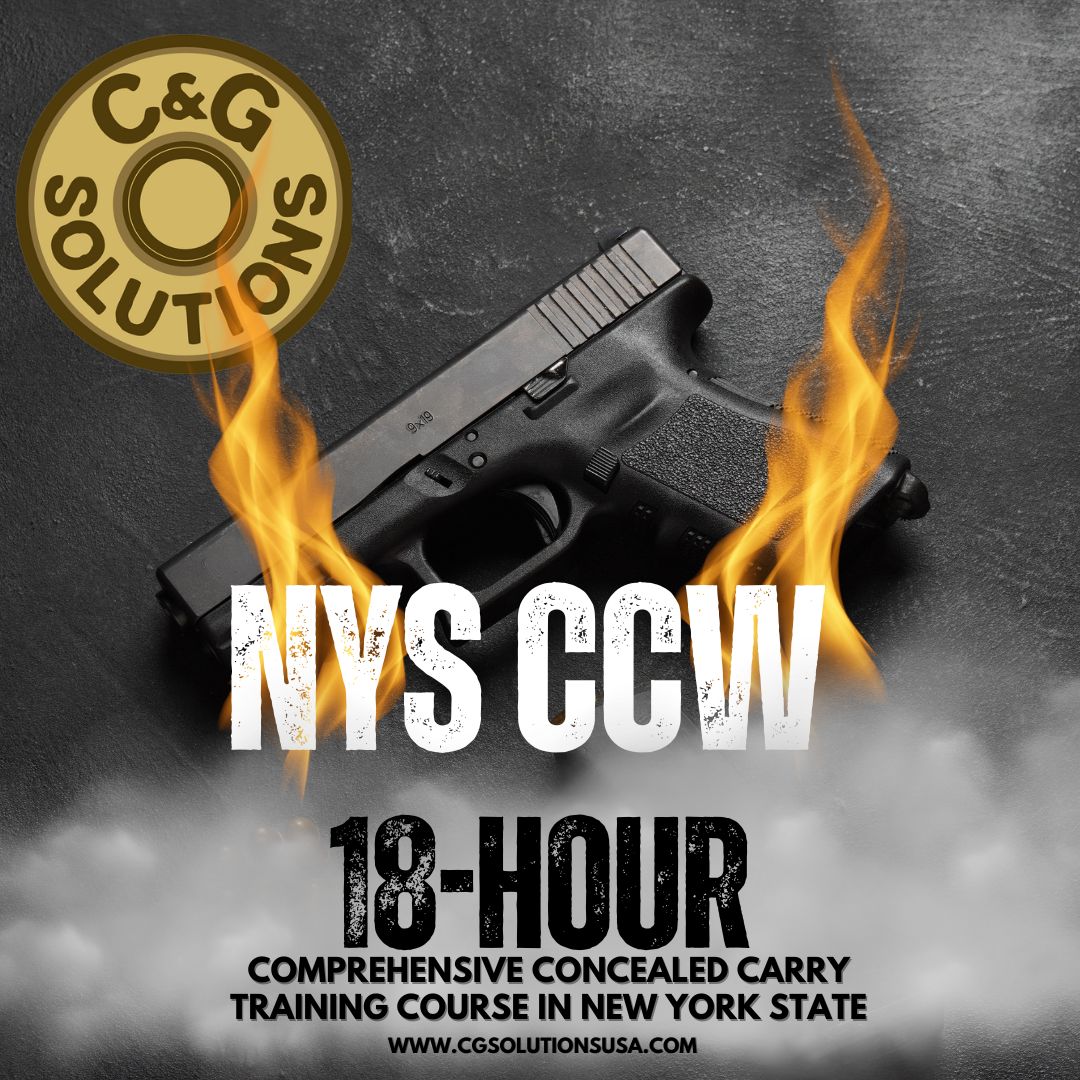 If you found this breakdown of NYS gun laws helpful, please share this post with your fellow gun owners. Staying informed is the first step toward staying safe!

Well-Taught, Well-Trained
Safety always comes first. We teach proper firearm handling to help prevent accidents and encourage responsible ownership.