





If you are ever forced to use your firearm in New York, the physical encounter is only the beginning. As soon as the smoke clears, a second, often more grueling fight begins: the legal battle.
In their seminal work Deadly Force Encounters, Dr. Alexis Artwohl and Loren W. Christensen introduce the Survival Triangle, composed of three critical sides: Mindset, Skills, and Environment. While most people focus on the "Skills" (shooting) and "Mindset" (situational awareness), the "Environment" includes the legal landscape you inhabit after an incident.
Failing to understand the legal environment in New York can be just as fatal as failing to clear a malfunction in a gunfight. When a gun owner faces charges, their defense usually rests on one of two pillars: Failure of Proof or an Affirmative Defense. Knowing the difference is crucial for your legal survival.
A Failure of Proof defense, often called a "Traverse" or "Elements" defense, is a direct challenge to the prosecution’s ability to prove their case. Under the American legal system, the state bears the burden of proving every single element of a crime beyond a reasonable doubt.
In this scenario, you are not necessarily offering a story of your own. Instead, you are pointing at the prosecution and saying, "You haven't proven your case."

The Affirmative Defense is a different beast entirely. Here, you are essentially saying: "Yes, I committed the act, but I had a legally recognized reason for doing so."
In the context of a self-defense shooting, you are admitting that you fired the weapon and that you intended to stop the threat. However, you are asserting that your actions were justified under the law.
Mixing up these two strategies: or having an attorney who doesn't specialize in firearms law: can be a catastrophic mistake.
In a typical NY case involving the use of force, you might actually use both strategies. For the violent crime charge (like Assault or Attempted Murder), you use an Affirmative Defense (Justification). But for the weapons charge (Possession), your lawyer might use a Failure of Proof argument regarding the licensing or the nature of the firearm itself.
If you mistakenly try to "poke holes" in a case where you clearly acted in self-defense, you may miss the opportunity to present the evidence required to meet your burden for Justification. Conversely, if you admit to the act to claim self-defense but do so in a way that doesn't meet the Article 35 requirements, you have essentially handed the prosecution a confession.

One of the most dangerous aspects of the legal fight is the disconnect between the science of human performance and the expectations of the courtroom.
Artwohl and Christensen highlight that under extreme stress, the human brain undergoes perceptual distortions. These include:
In court, a prosecutor may point to these gaps in your memory or inconsistencies in your statement as evidence that you are lying. An experienced defense attorney understands that these distortions are a biological reality, not a sign of guilt. They can bring in expert witnesses to explain how stress impacts your ability to process and recall information during a life-and-death encounter.
You cannot "wing it" when it comes to the legal aftermath of a shooting. The laws in New York are notoriously complex and often hostile to gun owners.
Hiring a criminal defense attorney who specifically understands NY Firearms Law and Article 35 Justification is non-negotiable. They must understand not just the statutes, but the physiological realities of a deadly force encounter. This ensures that your defense is built on a foundation of evidence-based research rather than just "hoping for the best."
At C&G Solutions, we don't just teach you how to press the trigger to the rear. We prepare you for the total encounter. Our training encompasses the entire Survival Triangle:
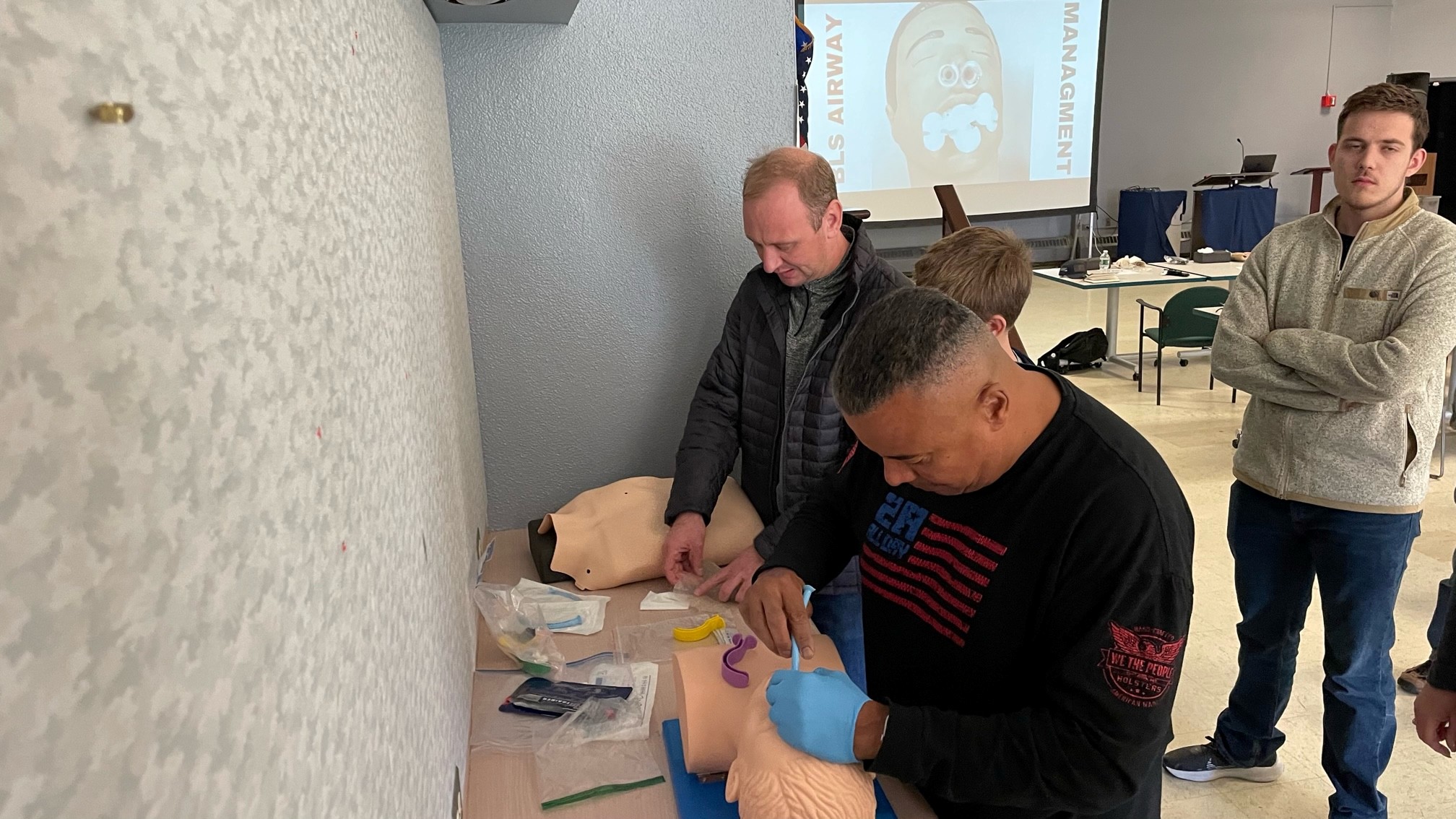
Our Citizen First Responder course, for example, is designed to give you the medical skills to survive the physical aftermath of an incident, while our CCW classes dive deep into the legal responsibilities of carrying a firearm in New York.
Call or text us at (516) 534-8323 to schedule your next training session.
The legal system doesn't care how "good" a person you are; it cares about what the law says and what can be proven. Just as you train with your pistol to ensure your "press" is consistent and your draw is fast, you must train your mind to understand the legal boundaries of your rights.
Defend with skill, Act with confidence.
Bring a Friend Offer: Safety is better with a partner. Bring a friend to your next class and receive a $50 discount. To redeem, simply mention your friend’s name in the comment section during your registration on our website.
Find us at our official location:
Mariners Cove
3615 Oceanside Road
Oceanside, NY
Did you find this legal breakdown helpful? Share this post with your fellow permit holders and help keep our community informed and protected.

Well-Taught, Well-Trained
Safety always comes first. We teach proper firearm handling to help prevent accidents and encourage responsible ownership.