




What You'll Learn in This Post
New York State's Concealed Carry Improvement Act changed everything for licensed carriers. If you're a concerned citizen ready to take the step from wanting to protect your family to legally carrying a firearm, the process can feel overwhelming. The 18-hour training requirement, the application packet, the background investigation, the interview — it's a lot.
But here's the truth: thousands of people just like you go through this process every year. The key is understanding not just what to do, but why each step matters. At C&G Solutions we focus on the science of survival and the reality of human performance under stress. As you embark on this journey, remember: Defend with skill, Act with confidence.
New York State law now requires a 16-hour classroom portion followed by a 2-hour live-fire module. That's 18 hours of training before you can even submit your application. Some people see this as a hurdle. We see it as your first line of defense.
Why this matters: Ignorance of the law is not a defense — not in court, and not after a defensive encounter. The classroom portion covers NYS Penal Law Article 35, which governs when you are legally justified to use deadly physical force. Understanding "sensitive locations" and the boundaries of lawful carry is your first step toward what is often called "legal survival" in professional training circles.
Real-World Scenario: Imagine defending yourself in a parking lot at 2 AM, only to find out later that the lot was technically on restricted property. Even if your use of force appears justified, the location issue can create serious legal trouble. That is why the classroom portion exists — to make sure you know the boundaries before you ever need to act.
> Key Takeaway: The 18-hour course is a mandatory prerequisite for all new concealed carry applicants in NYS, replacing all previous shorter safety courses. There are no shortcuts.
The first 16 hours of your training take place in the classroom. This is where we build the "Mindset" and "Environment" legs of The Survival Triangle — a core framework for defensive preparation. Most new shooters focus on the gun. Serious students learn that judgment, awareness, and decision-making are just as crucial.

Real-World Scenario: You're at a gas station late at night. A person approaches asking for change, but their body language is wrong — they are scanning the lot, their hands stay buried, and they are moving to cut off your exit. Most people on autopilot ignore those cues. In class, you learn to recognize pre-attack indicators early enough to leave, create distance, or de-escalate before the problem turns physical.
That matters because stress changes what you notice. Research into dangerous encounters shows that people often experience tunnel vision, auditory exclusion, and distorted time perception. If you have never thought through these reactions in advance, your brain can freeze when you need clear judgment most.
The classroom also covers:
> Mindset Callout: The best defensive encounter is usually the one you avoid. Awareness buys you time, and time buys you options.
This is where the "Skills" leg of the Survival Triangle comes to life. Under the guidance of our instructors, you move from the classroom to the range. You learn to establish a stable grip, confirm your sight picture, and press to the rear on the trigger without disturbing the sights.
Why we say "press to the rear": The word "squeeze" causes many new shooters to tighten their whole hand. That often drives the muzzle off target and hurts accuracy. A straight, deliberate press to the rear keeps the gun tracking correctly, and under stress that small mechanical detail matters.
On the range, you also learn something more important than marksmanship alone: accountability. Every round you fire has a legal and moral consequence. If your fundamentals fall apart under pressure, misses do not simply disappear — they create risk for everyone around you.
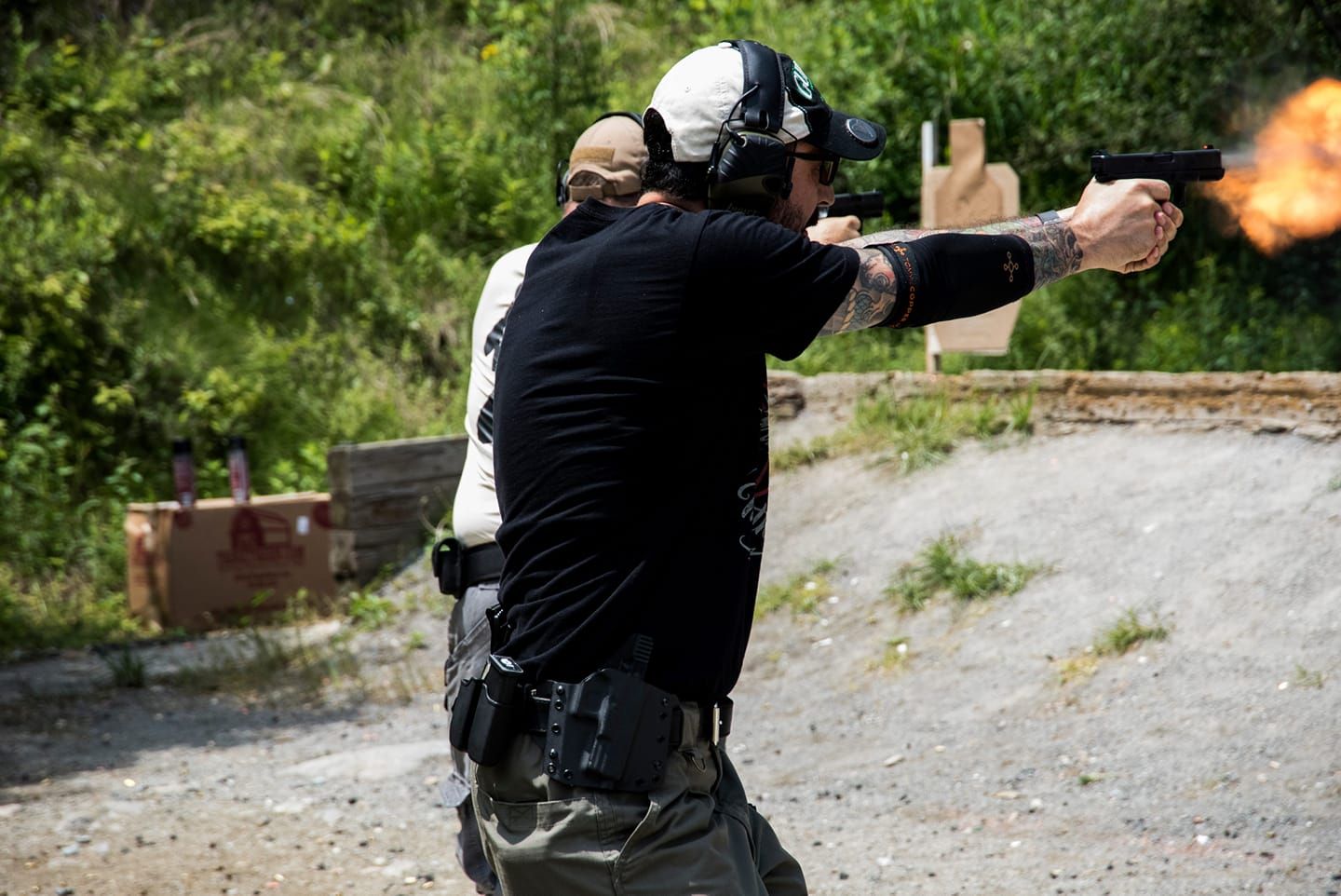
Understanding Human Performance under Stress explains why this practice matters. In a real confrontation, your heart rate rises, your vision narrows, your hearing may shut down, and your fine motor control can deteriorate. Range training helps you build repeatable mechanics so your body has something reliable to fall back on when adrenaline spikes.
> Training Callout: You must pass a live-fire proficiency assessment and a written exam with at least an 80% score to receive your certificate. This is a real skills check, not a rubber stamp.
Ready to get started? Our comprehensive 18-hour course is designed for beginners and experienced shooters alike. You'll leave with the certificate, the knowledge, and the confidence to carry responsibly.
Register for the NYS 18-Hour CCW Course Here
Once you have your certificate of completion, the paperwork begins. This is where many applicants get delayed — not because the system is impossible, but because small mistakes create big slowdowns.
What you need to gather:
Real-World Context: If you had an old arrest that was dismissed, disclose it anyway. Investigators often care less about the existence of an old issue than they do about whether you were honest about it. Inconsistencies can be viewed as a lack of "good moral character," and that can derail your application fast.
A clean submission also shows maturity. If your references are incomplete, your address history is sloppy, or household information does not match official records, you can expect delays. The process rewards people who prepare carefully and treat the application like the serious legal document it is.
> Paperwork Callout: Organize your documents before you submit. A missing reference, an incomplete disclosure, or a rushed answer can add months to your wait time.
The final step is the in-person interview with a licensing officer. This is not a casual conversation. The officer is looking for stability, responsibility, and signs that you understand the weight of carrying a concealed handgun in public.
Approach it the same way you would approach any serious professional interview. Answer questions directly. Do not ramble. Do not try to sound tactical. Show that you understand safety, judgment, and the responsibility that comes with lawful carry.
This is also where post-incident legal and emotional survival becomes more than a classroom phrase. High-stress events affect memory, speech, and confidence. Even outside a use-of-force event, stress can cause people to talk too much, answer poorly, or appear uncertain. Preparation helps you stay composed.
> Final Takeaway: The application process may take several months depending on your county. Use that time to continue developing sound habits, decision-making, and safe gun-handling skills.
Training is a perishable skill. Whether you are a first-time applicant or a retired officer looking for HR218/LEOSA Recertification ($100.00), our goal is to give you practical tools that help you manage the legal, mental, and physical realities of armed self-defense.
For those who already have their license, staying current is not optional — it is part of responsible ownership.
Consider adding our Citizen First Responder class to your training plan. The ability to respond to massive bleeding or airway problems after violence is a survival skill that connects directly to the aftermath of real emergencies.
Bring a Friend and Save!
Safety is better with a partner. Bring a friend to any of our courses and both parties receive $50 off their balance. Simply mention your friend's name in the comment section during registration to claim your savings.
Visit us at our official training location:
Mariners Cove
3615 Oceanside Road
Oceanside, NY
Call or text us to schedule your training: (516) 534-8323
Defend with skill, Act with confidence.
If you found this guide helpful, please share it with someone who's just starting the process. Education is the first line of defense.

Well-Taught, Well-Trained
Safety always comes first. We teach proper firearm handling to help prevent accidents and encourage responsible ownership.