





> What You’ll Learn in This Post:
> * The essential administrative and safety gear required for a New York range visit.
> * The psychological and practical benefits of maintaining a detailed shooting logbook.
> * How to transport your equipment professionally and legally to ensure a smooth training session.
Stepping onto a firing line for the first time can be an overwhelming experience. Between the noise, the mechanical complexity of the firearm, and the weight of responsibility, there is a lot to manage. Whether you are a concerned citizen preparing for your NYS Conceal Carry permit or a new shooter looking to build a foundation of safety, your first range visit should be defined by professional preparation, not anxiety.
At C&G Solutions, we believe that training is a path to resolution. With over 30 years of experience in EMS, teaching, and security, Chris Goemans has seen how preparation, or the lack thereof, impacts performance under pressure. Your range bag is more than a collection of tools; it is your support system for developing the skills necessary to protect yourself and your family.
Before you even pack your bag, you must internalize the four rules of firearms safety. These are not suggestions; they are the non-negotiable legal and moral framework of every range in the world.
When you are on the range, your focus should be on your "press to the rear" (the trigger manipulation) and your sight alignment. You cannot do this effectively if you are constantly second-guessing your safety protocols.
In New York, administrative compliance is just as important as marksmanship. You cannot train if you cannot get through the front door.

Your "Eyes and Ears" are your primary defense against the physical environment of the range.
Pro Tip: Wear a baseball cap without the top button, this will help your ear pro sit flatter and prevent it from shifting. The brim helps prevent hot brass from falling behind your safety glasses or down your shirt, which can cause a dangerous "hot brass dance" on the firing line.
The way you bring your equipment onto the range speaks volumes about your level of training.

If you are working toward your NY State 18-hour Conceal Carry Course or need your 2-hour live-fire renewal, don't wait for a legal hurdle to stop your progress.
Book Your NYS 18-hour CCW Course Here
The difference between "shooting" and "training" is data. Professional shooters keep a logbook. By recording the number of rounds fired, the drills performed, and your accuracy at specific distances, you create a clear roadmap for improvement.
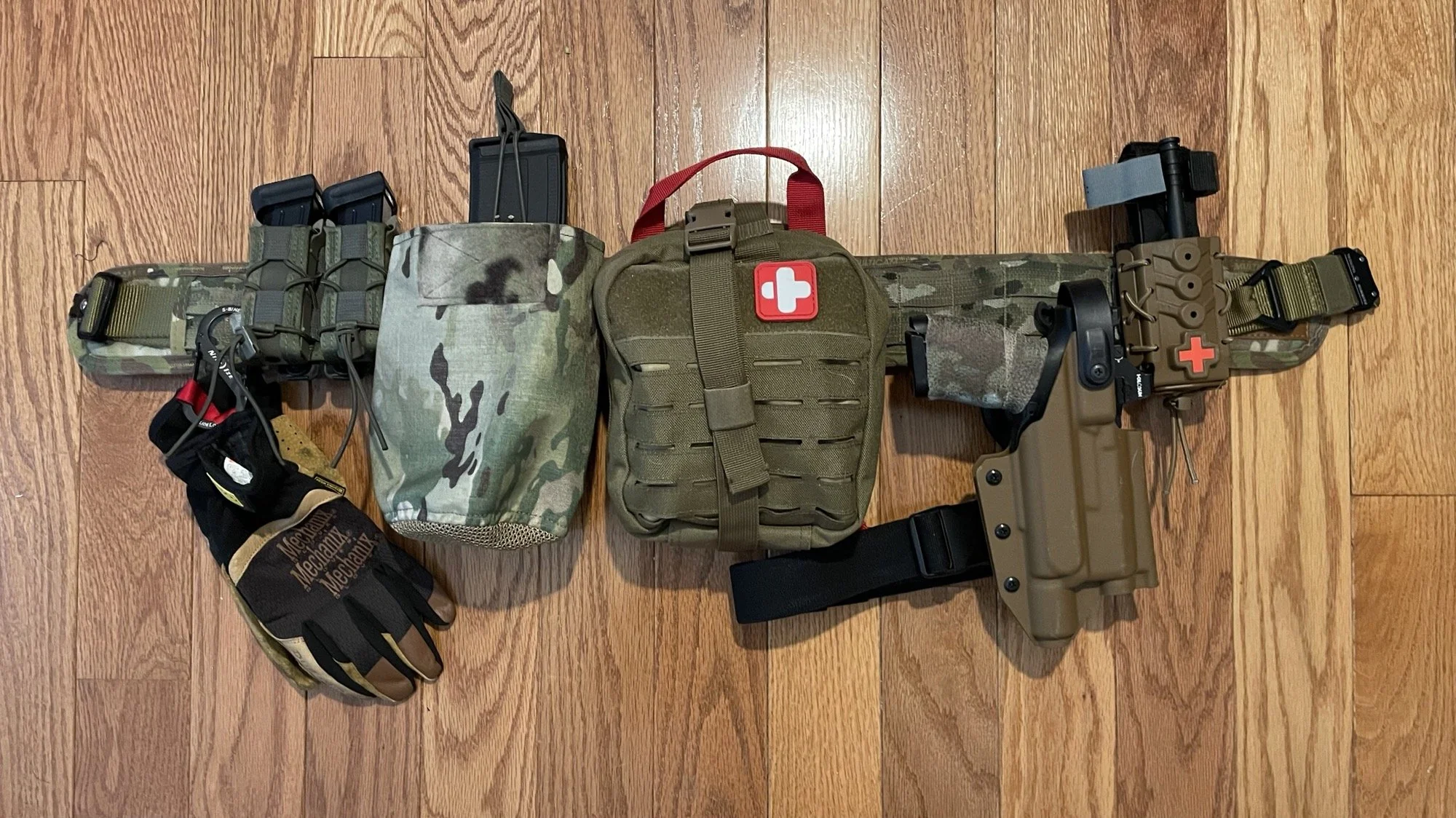
Safety doesn't end with a holster. We believe every shooter should be a "Citizen First Responder." At a minimum, your range bag should have a basic medical kit.
Training in tactical first aid is just as crucial as firearms training. You are far more likely to use a tourniquet in your lifetime than your sidearm.
We are committed to providing professional, practitioner-focused training for the New York community. Whether you are a retired officer or a first-time shooter, we have a seat for you.
Bring a Friend Offer: Safety is better shared. Bring a friend to your next class, and you both receive $50 off your balance. Simply mention your friend’s name in the comment section during registration.
Call or text us to schedule your next session.
Your first range visit is the beginning of a lifelong journey of skill and responsibility. By showing up with the right documentation, PPE, and a mindset focused on the "Survival Triangle," you set yourself up for success. Remember: every shot is a diagnostic tool. Focus on the mechanics, keep your movements deliberate, and always prioritize the four safety rules.
Defend with skill, Act with confidence.
Location: Mariners Cove, 3615 Oceanside Road, Oceanside, NY.
If you found this guide helpful, please share it with a fellow shooter who is preparing for their first time on the line!

Well-Taught, Well-Trained
Safety always comes first. We teach proper firearm handling to help prevent accidents and encourage responsible ownership.