



Welcome to the kickoff of our "Shooting Simplified" series. Over the next few weeks, we are going to strip away the overcomplicated jargon and the "tacti-cool" fluff to get back to the core of what actually makes a great shooter. Whether you are just starting out in a firearm safety course nyc or you’re a seasoned veteran looking to sharpen your edge, these fundamentals are your bread and butter.
To start the series, we’re talking about the literal foundation of everything you do with a firearm: your stance.
Most people walk onto a range, plant their feet like they’re rooted in concrete, and start punching holes in paper. It’s comfortable, it’s easy, and it’s a total trap. We call this "Range Posture," and while it might help you get a decent group on a static target at five yards, it could actually be holding you back from becoming a truly proficient, safe, and mobile shooter.
Think about the last time you were at the range. You probably saw someone standing perfectly upright, maybe even leaning back slightly to compensate for the weight of the gun. Their feet were likely shoulder-width apart and perfectly parallel.
In the world of target shooting, this is fine. But at C\&G Solutions, we don’t just train you to hit paper; we train you for the real world. In a real-life scenario: the kind we prepare you for in our nys 18-hour pistol course: static targets don't exist. Threats move, environments change, and your body’s natural physiological response to stress is going to try to take over.
The "Range Posture" fails because it prioritizes comfort over stability and mobility. If you are leaning back, the recoil of even a 9mm is going to rock you off your center of gravity. If your feet are glued to the floor, you can’t pivot to face a new threat or move to cover. You’ve essentially turned yourself into a stationary turret, and in a self-defense situation, being stationary is the last thing you want to be.
Most people think shooting is about accuracy. And yes, hitting what you’re aiming at matters.
But if you’re carrying for protection, your real job is bigger than the bullseye. It’s responsibility. It’s staying switched on. It’s having the mental bandwidth to move your family to safety, read what’s changing in front of you, and make a clean decision under pressure with unwavering confidence.
That’s the 30,000-foot view.
Here’s the hard truth: if your stance is shaky, your brain gets dragged down into survival mode. You start spending your attention on not falling backward, not getting rocked by recoil, and not “catching up” after every shot. That’s costly in a crisis.
When you build a real athletic base, you buy yourself peace of mind. Your body does its job automatically, and you get the unfair advantage: awareness. You can actually look up and process what matters:
A proper stance isn’t a “range trick.” It’s the foundation that keeps you stable, mobile, and in control when chaos shows up.
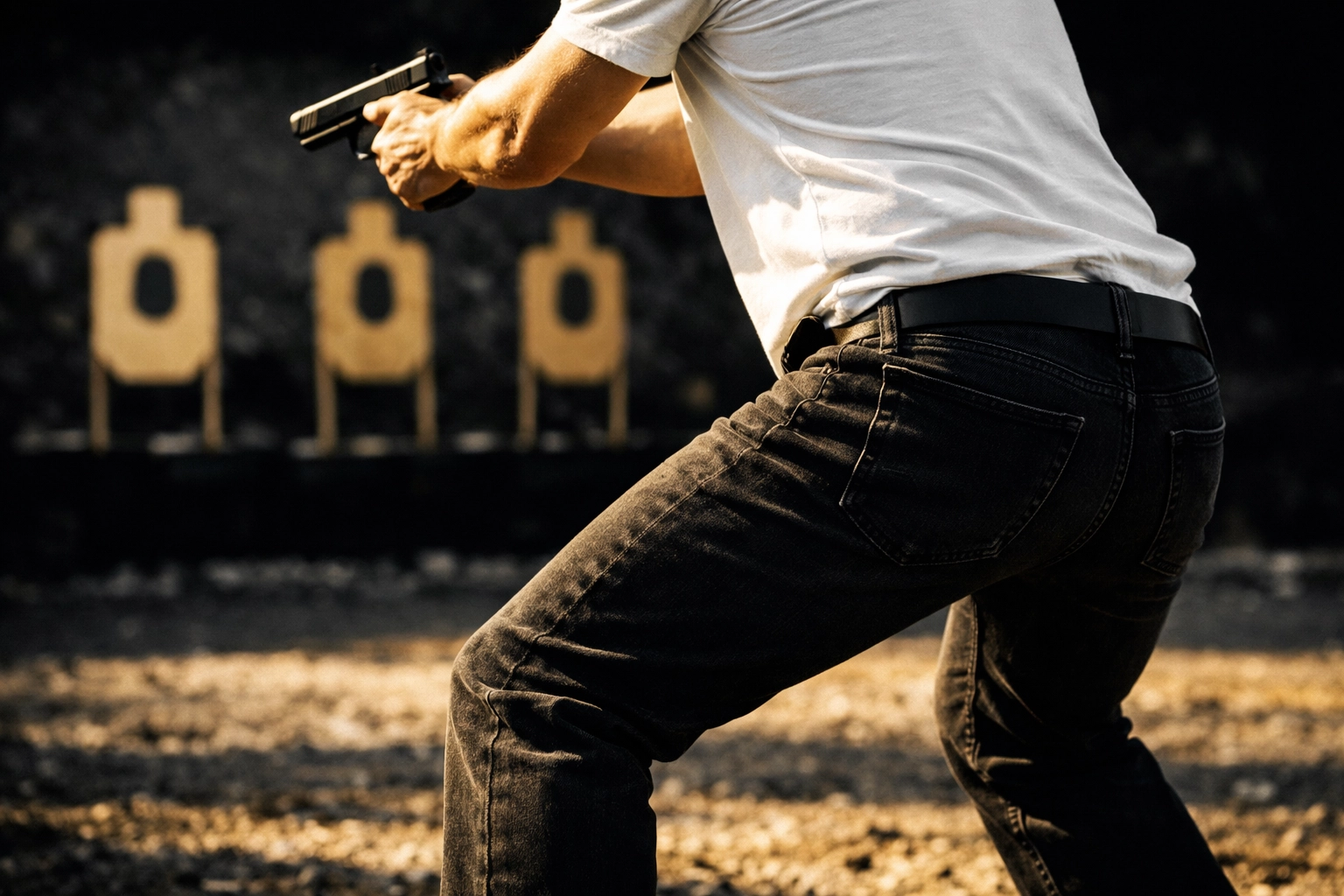
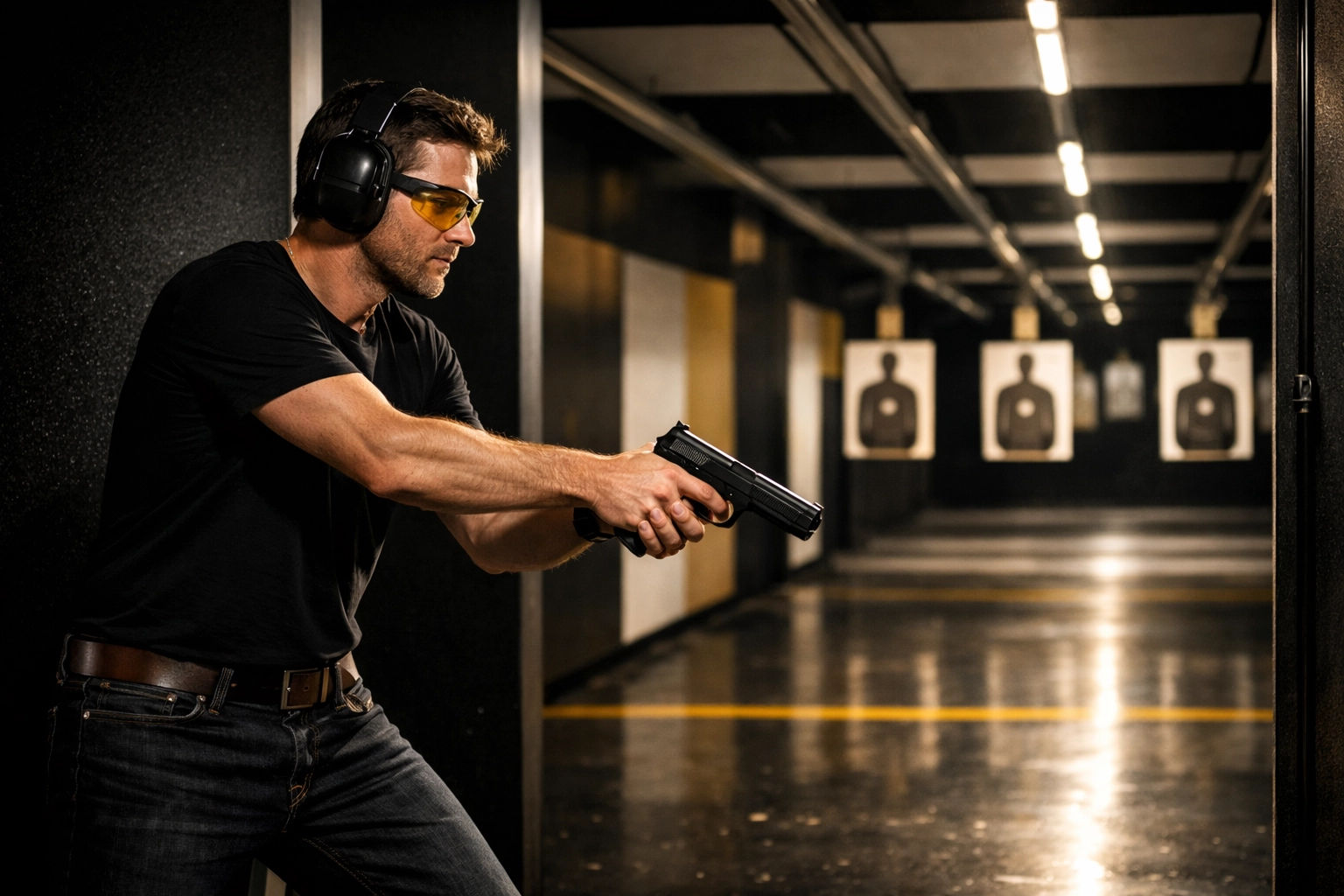
So, if "Range Posture" is out, what’s in? We want an Athletic Stance. Think about a linebacker waiting for the snap, a tennis player ready to return a serve, or a boxer in the ring. They aren't standing straight up; they are loaded and ready to move in any direction.
Forget parallel feet. You want a staggered stance. If you’re right-handed, your left foot should be slightly forward. Your feet should be roughly shoulder-width apart, but with that slight stagger to provide front-to-back stability. This prevents that "teeter-totter" effect when the gun recoils.
Well, not literally on your tiptoes, but your weight should be on the balls of your feet. If your weight is on your heels, you’re already falling backward. By keeping the weight forward, you are "driving" into the gun. This allows your body to absorb the energy of the shot rather than letting the shot push you around.
Never lock your knees. Locked joints transfer all that recoil energy directly into your spine and head, which makes it harder to track your sights for a second shot. Keep a slight bend in your knees. They act as shock absorbers, keeping you mobile and ready to pivot.
This is where most students in our private pistol coaching sessions see the biggest improvement. You want to lean slightly forward from the waist. Think of it as an "aggressive" posture. You aren't just holding the gun; you are dominating it. This forward lean helps align your center of gravity over your lead foot, making recoil management almost effortless.
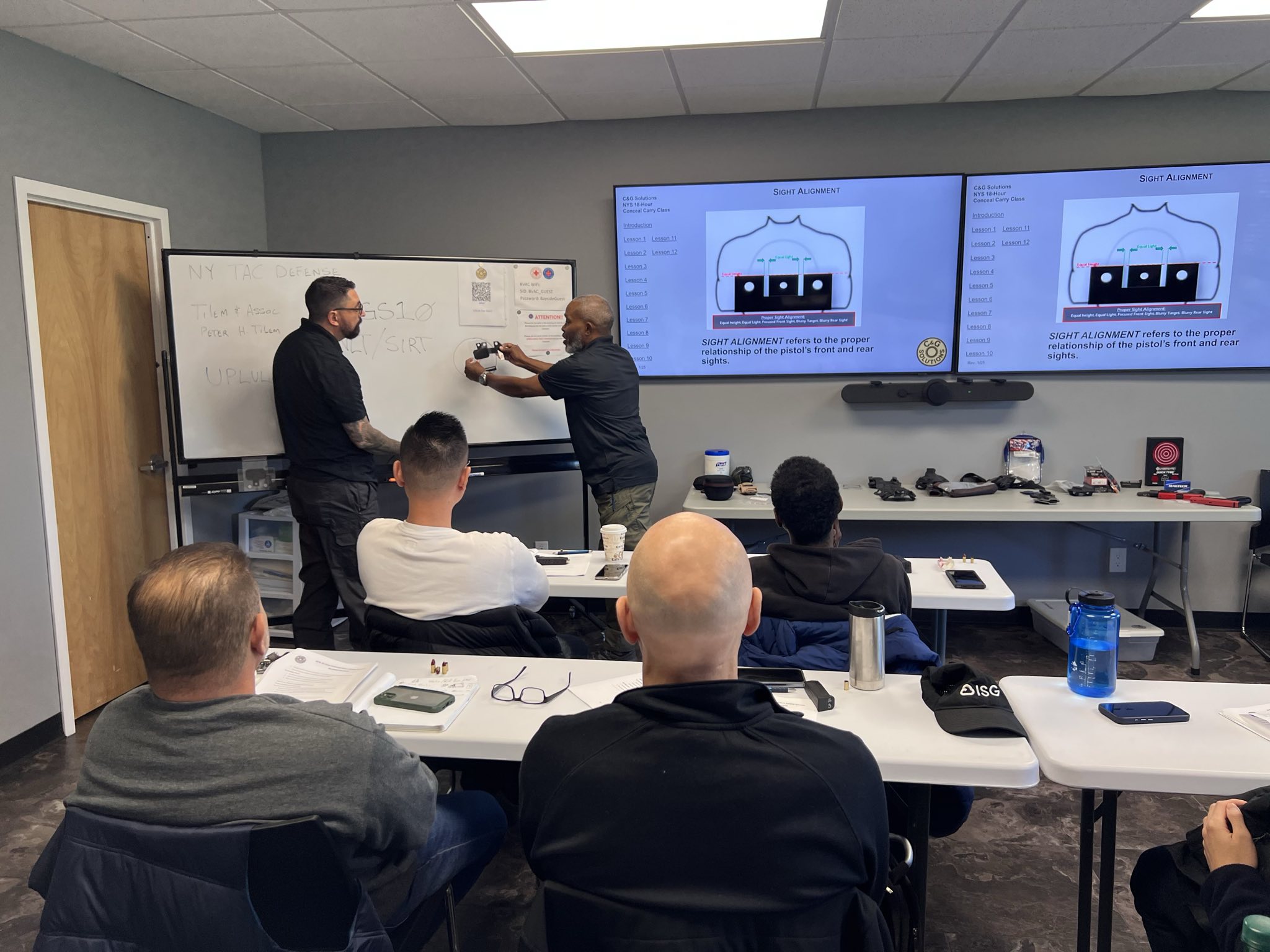
Navigating the legal landscape of New York can feel like an uphill battle. When you take a firearm safety course nyc, you’re learning about more than just marksmanship: you’re learning about the immense responsibility that comes with carrying a firearm in a crowded, urban environment.
In a place like New York, "situational awareness" isn't just a buzzword; it’s a survival skill. A mobile stance allows you to move toward safety or move away from a crowd while maintaining a safe direction with your muzzle. If you are stuck in a rigid range posture, your only option is to stand your ground, which might not be the safest or most legally sound choice in a given moment.
Our training at our Mariners Cove location in Oceanside, NY, emphasizes that every physical move you make has a legal and safety implication. We don't just want you to be a good shot; we want you to be a smart, responsible gun owner.
While today is about stance, it’s important to remember that everything is connected. If your stance is weak, you will likely compensate by over-gripping the firearm or jerking the trigger. When you have a stable base, your arms and hands can stay relaxed enough to perform a smooth, clean press to the rear.
Many shooters clamp their entire hand when they get nervous or off-balance, which pulls the shot off target. A rock-solid stance provides the platform that allows for isolated finger movement. It’s the difference between fighting the gun and working with it.
Next time you’re at the range (or even practicing dry-fire at home with an empty, cleared firearm), try this simple drill to test your stance:
Building a better stance isn't about looking cool; it’s about creating a repeatable, reliable platform for safety and accuracy. It’s the first step in our "Shooting Simplified" journey because without it, every other skill: grip, sight alignment, and trigger press: will suffer.
At C\&G Solutions, we pride ourselves on professional, supportive training that’s built around safe handling and real-world performance. We want to help you move past the "standard" range habits and move toward a level of skill that gives you true confidence. If you’re ready to take the next step, check out our upcoming courses or visit us in Oceanside to see how personalized coaching can transform your shooting.
Stay tuned for our next post, where we’ll dive into The Master Grip and show you how to stop fighting recoil once and for all.
Defend with skill, Act with confidence.*
Want to get serious about your training?
Whether you need your NYC CCW 18-hour class or you’re interested in our Citizen First Responder training, C\&G Solutions is here to provide professional, supportive, and judgment-free education.
Location:
Mariners Cove, 3615 Oceanside Road,
Oceanside, NY.
Contact us today to book a session!
Found this training tip helpful? Share it with your colleagues and fellow shooters to help spread the word on safety!

Well-Taught, Well-Trained
Safety always comes first. We teach proper firearm handling to help prevent accidents and encourage responsible ownership.