




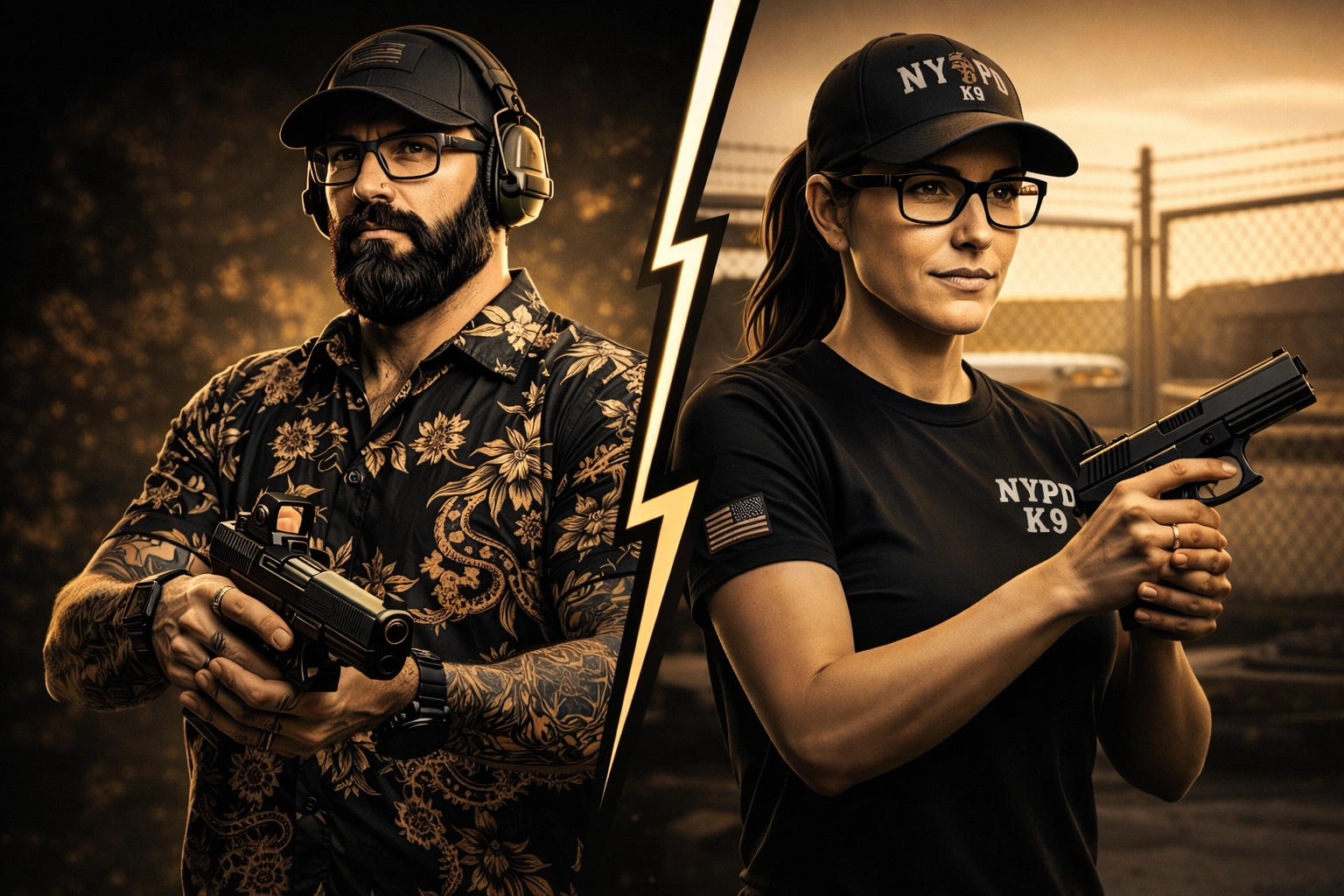
If you walk into our training facility at Mariners Cove, 3615 Oceanside Road, Oceanside, NY, you’re likely to hear a recurring debate. It’s the "Coke vs. Pepsi" of the firearms world, and it divides even the best of friends. We’re talking about Red Dot Sights (RDS) vs. Iron Sights.
In one corner, we have Chris Goemans, our COO and a man with over 30 years of experience in EMS, security, and firearms instruction. Chris is a self-proclaimed "dot guy." He loves the tech, the speed, and the precision that a modern optic provides.
In the other corner, we have Sue Cronin, a retired NYPD K9 officer who has spent decades trusting the physical steel on top of her slide. Sue is an "iron sight lover" through and through. For her, if it isn’t broken, don’t add a battery to it.
When you’re preparing for your nys concealed carry course, one of the biggest decisions you’ll make is how you intend to aim. Navigating the world of optics can feel like an uphill battle, especially with the strict requirements of a nyc pistol permit course.
Let’s break down the "why" behind their difference of opinions so you can decide what’s right for your holster.
*

Chris looks at firearms technology through a lens of efficiency. Having spent decades in high-stress EMS and security environments, he knows that under pressure, your brain wants to do one thing: look at the threat.
With traditional iron sights, you have to align three things: the rear sight, the front sight, and the target. Because the human eye can only focus on one plane at a time, you’re forced to blur the target while you focus on that front sight.
"A red dot changes the game," Chris explains. "You stay focused on the threat. You see the person or the situation clearly, and the dot just 'floats' on top of it. It’s more natural for how our eyes work in a fight."
Let’s be real: as we get older, that front sight starts to look a bit fuzzy. For many students in our firearm safety course, the red dot acts as a "cheat code" for vision issues. Since the dot is projected at "infinity," you don’t need perfect near-vision to be accurate.
The biggest hurdle for new shooters in an nyc concealed carry course is the "draw to dot" transition. If your presentation isn’t consistent, you’ll find yourself "fishing" for the dot in the window.
Electronics can fail. Batteries die, and glass can fog or shatter. While modern optics like Trijicon or Holosun are incredibly durable, they aren't invincible.
*
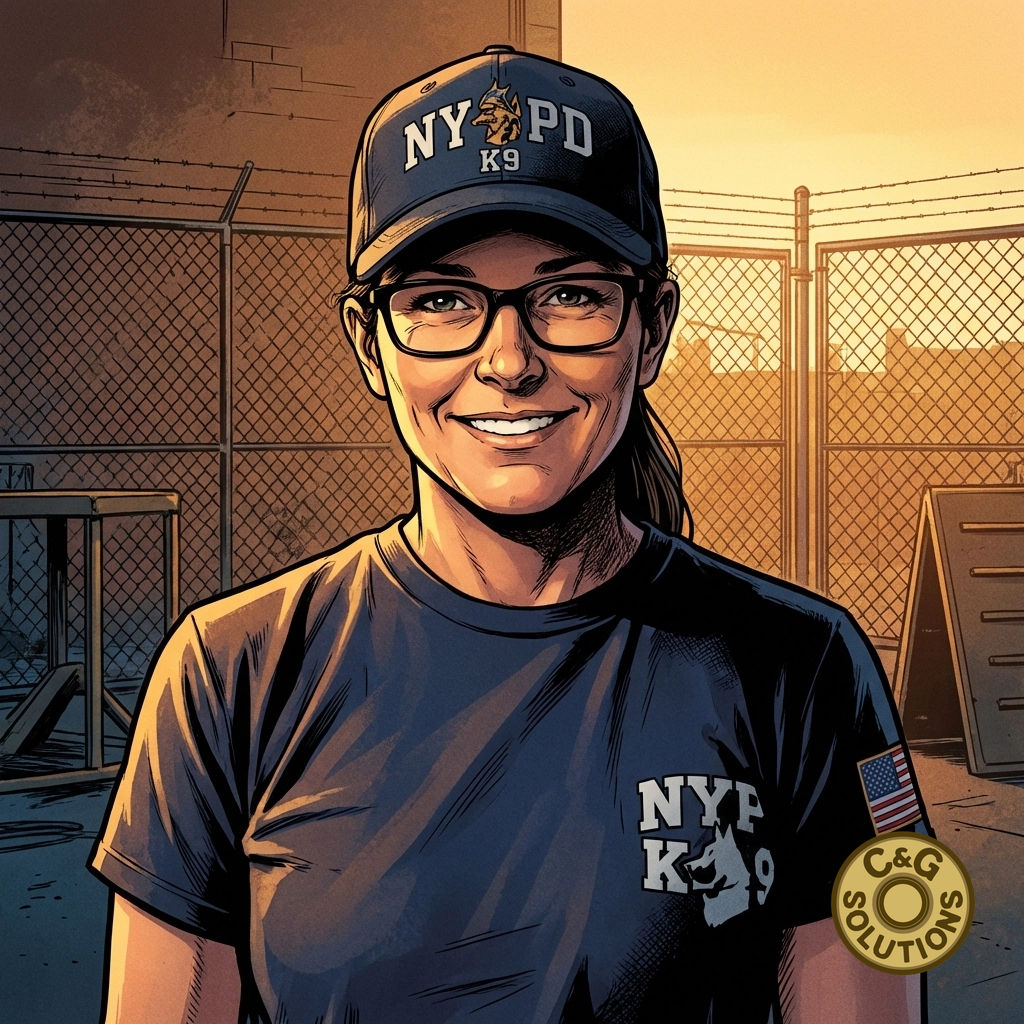
Sue comes from a world where reliability is the only metric that matters. When you’re working a K9 or patrolling NYC streets, you need gear that works every single time, regardless of whether you remembered to change a CR2032 battery last year.
"Iron sights don't have batteries," Sue says. "They don't have motherboards. If the gun is in one piece, the sights are working." For someone looking for a concealed carry class ny who wants a "set it and forget it" setup, irons are the gold standard.
Adding a red dot adds bulk. It makes the "print" of the gun slightly larger and can snag on clothing during a draw. For many women or individuals with smaller frames navigating nys ccw course requirements, a slim, iron-sighted pistol is often easier to hide.
As mentioned, irons require you to shift your focus away from the threat and onto the front sight. In a high-stress scenario, physiological "tunnel vision" makes this incredibly difficult to do. It requires significant muscle memory: the kind we bake into our nys 18-hour pistol course.
At 7 yards, irons are great. At 25 yards? That front sight post might completely cover the target you’re trying to hit. Red dots allow for much higher precision at longer ranges because the aiming point (the dot) is much smaller than a physical sight post.
*
Whether you choose Chris’s high-tech dot or Sue’s reliable irons, neither system works if you don't master the fundamentals. One of the most common mistakes we see in our ny concealed carry class is "milking" the grip or "squeezing" the whole hand.
At C\&G Solutions, we teach you to press the trigger to the rear. A clean, straight-back press ensures that your sights: whether red or iron: stay aligned on the target at the moment of ignition. If you "squeeze," you're likely to pull your shots low and left (for righties).
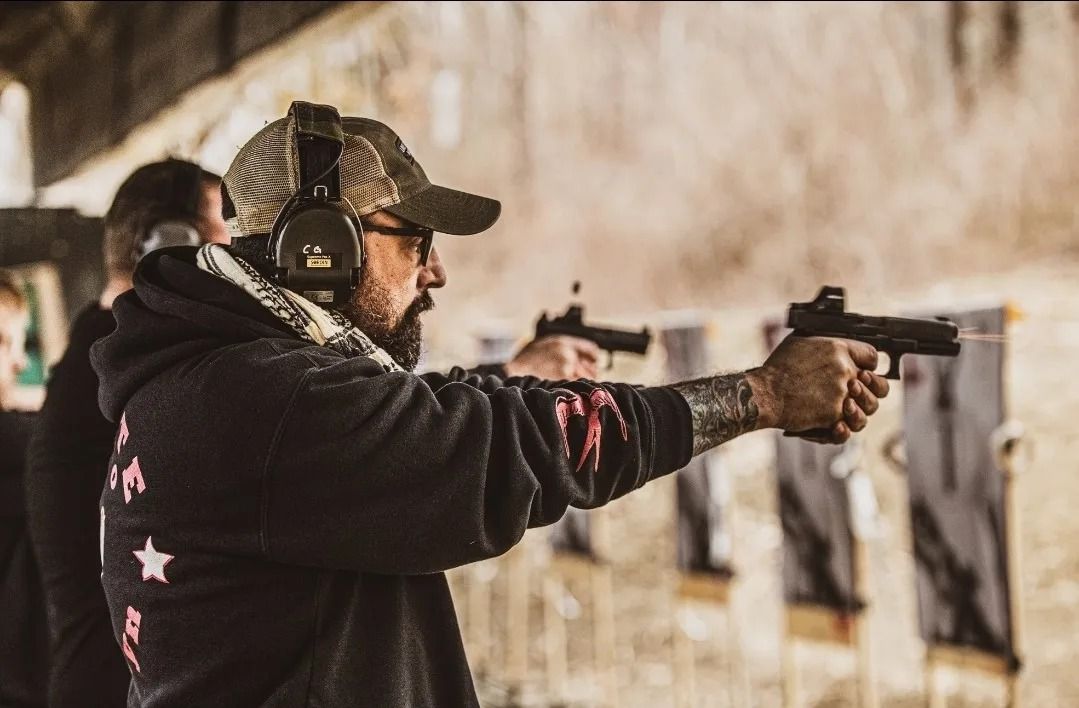
Most people think there is a "right" answer. The truth is, the best system is the one you actually train with.
If you are a retired officer coming to us for your hr 218 nyc qualification, you might stick with what you carried for 20 years. Sue often works with our HR 218 students, ensuring they are sharp and ready for their yearly recertification ($100.00).
However, if you are a new applicant taking the nys 18-hour pistol course, you have the opportunity to start fresh.
Even if you're a "dot guy" like Chris, we always recommend "co-witnessing" your sights. This means having iron sights that are visible through the window of your red dot. If the dot fails, the irons are right there as a backup.
During our private pistol coaching, we often have students try both systems. We see confidence soar when a student who struggled with irons suddenly realizes they can hit a bullseye consistently with a red dot. Conversely, we see the "aha!" moment when a dot-user learns to find their irons when the electronics are turned off.
*
Navigating the legal maze of NYC carry is a heavy responsibility. Whether you’re shooting at an indoor range like the ones seen in our sessions or practicing dynamic drills, the goal is the same: total control.
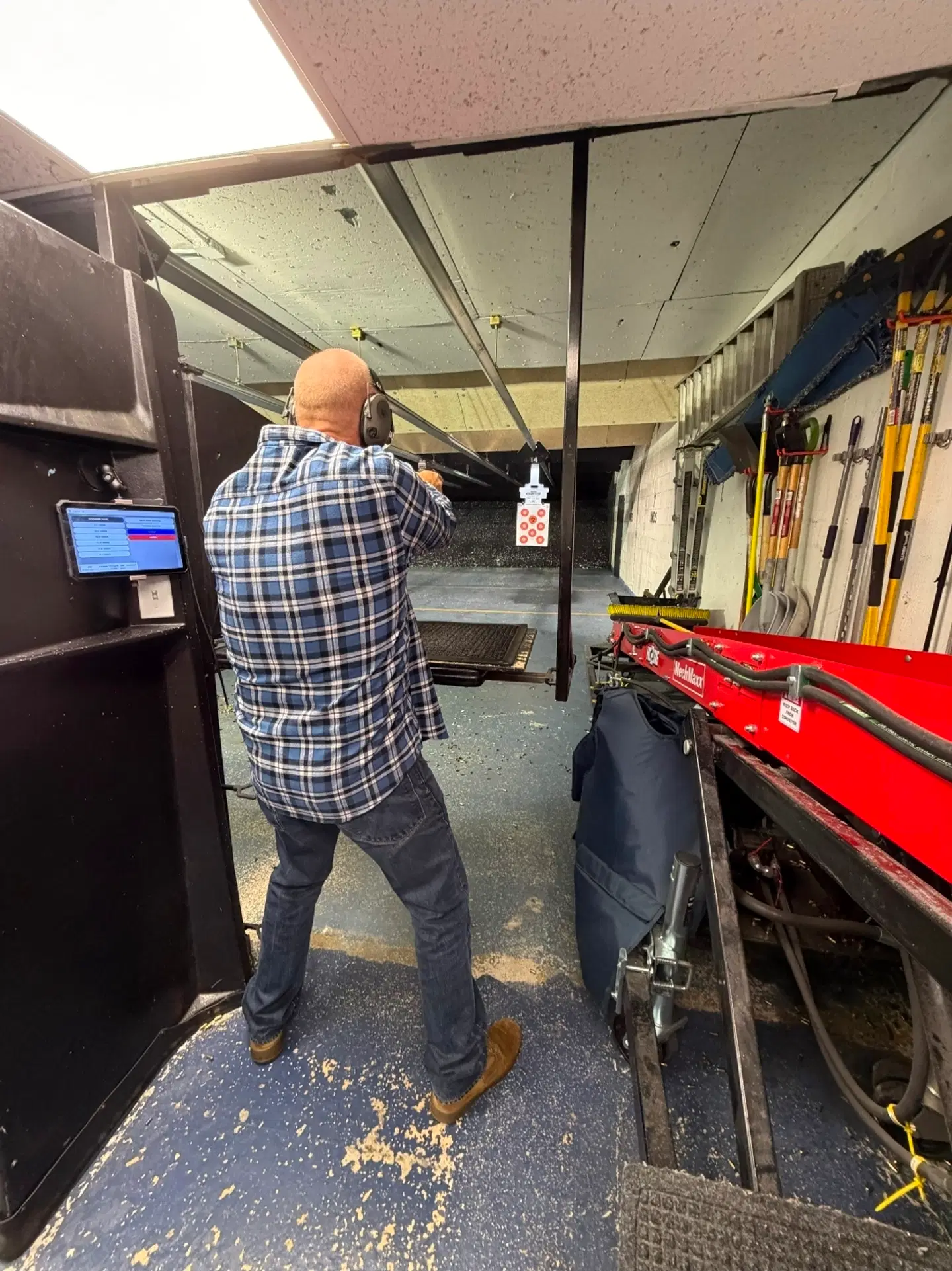 Defend with skill, Act with confidence. This isn't just a tagline; it’s the standard we set for every student who passes through C\&G Solutions.
Join us for an upcoming class at our Oceanside location. Whether you need the full 18-hour grind or a quick recertification, we’ve got you covered.
Call or text us to schedule your session!
Training is always better (and more fun) with a partner. Bring a friend to any of our full courses and receive a $50 discount. To claim this, simply mention your friend’s name in the comment section during registration on our website.
Choosing between a red dot and iron sights is a personal journey. Chris and Sue might never fully agree on which is "best," but they both agree on this: a shooter who doesn't train is a liability, regardless of what's on top of their slide.
Find this breakdown helpful? Share it with your range buddy and let us know in the comments: are you Team Chris (Dot) or Team Sue (Irons)?

Well-Taught, Well-Trained
Safety always comes first. We teach proper firearm handling to help prevent accidents and encourage responsible ownership.