




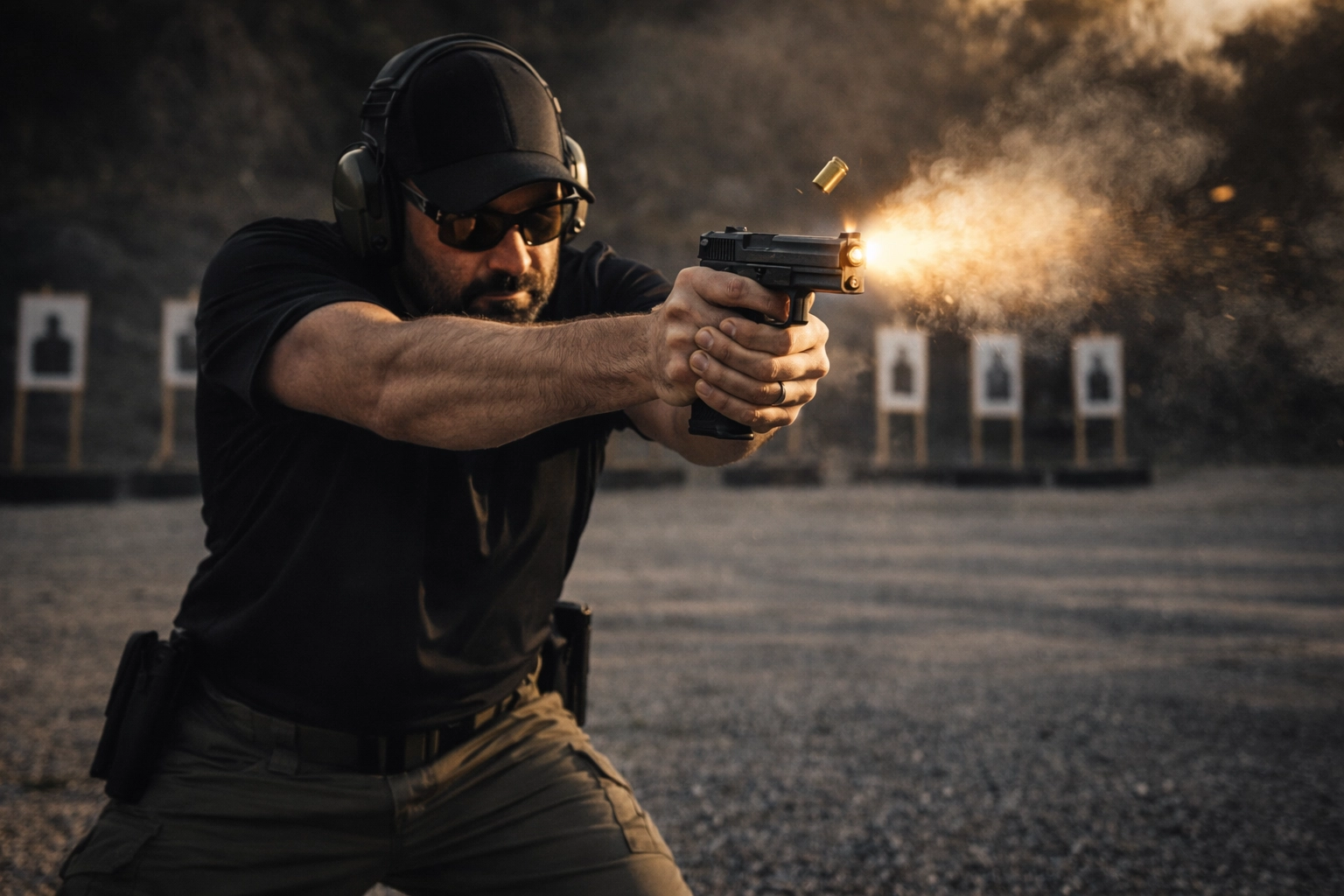
You’ve done the work. You found a solid stance that balances your weight. You’ve locked in a master grip that tames the recoil of your handgun. Your sight alignment is crisp, and you’ve just executed a perfect, smooth press to the rear. The gun goes bang.
For most casual shooters, that’s where the story ends. They relax their hands, drop the gun to look at the target, and admire (or lament) the hole they just made in the paper.
If you are training for self-defense, that habit is a trap.
In this fifth and final installment of our Shooting Simplified series, we are talking about Follow Through. Think of follow through as the bridge between the shot you just took and the one you might need to take next. It is the glue that holds your fundamentals together under pressure and ensures that if the first round didn't end the threat, the second one is already on its way with pinpoint accuracy.
At C\&G Solutions, we don’t just want you to be a good "range shooter." We want you to be prepared for the reality of a defensive encounter. Defend with skill, Act with confidence.
Most people think follow through is something that happens after the shot. In reality, it is the continuation of every fundamental we’ve discussed so far, maintained through the entire ignition cycle and into the recovery.
Follow through is the conscious decision to stay "in the gun" until the fight is over. It’s about maintaining your shooting platform, your grip, and your mental focus even as the slide cycles and the brass flies.
When you neglect follow through, you start "shot-snatching." You anticipate the noise and the recoil, causing you to relax your grip or blink right as the sear releases. This leads to those frustrating low-left hits (for righties) or inconsistent groups that you can’t quite figure out.
In a perfect world, one shot stops the threat. But we don't live in a perfect world; we live in a world where adrenaline, thick clothing, and poor shot placement are real factors. If you fire a shot and immediately "power down" to see how you did, you are wasting precious seconds re-building your fundamentals if a second shot is required.
By mastering follow through, you are essentially "pre-loading" your next success. You are keeping the gun in the fight.
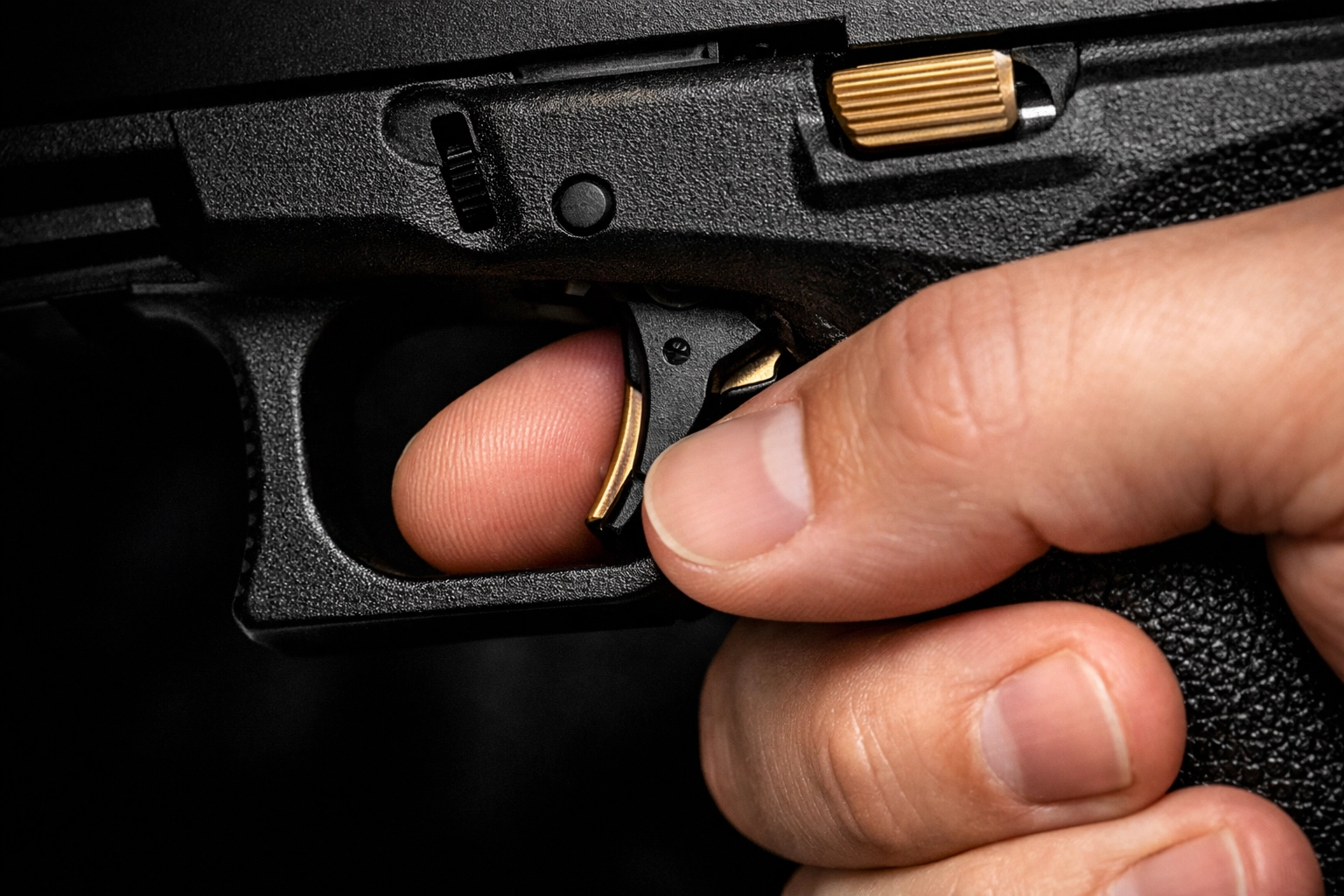
The most common mistake we see during our private pistol coaching is the "trigger flick." This is when a shooter presses the trigger and then immediately removes their finger entirely, letting it slap against the front of the trigger guard.
Instead, you should maintain contact. After the shot breaks, hold the trigger to the rear during the recoil. As the sights settle back on target, slowly release the trigger only until you feel and hear that "click", the reset.
By staying on the reset, you’ve eliminated all the "dead space" or slack in the trigger for your next shot. You are already at the "wall," ready to press again if the situation demands it. This is the secret to speed and accuracy combined.
Your eyes are your primary source of data. If you drop the gun to look at the target, you’ve stopped receiving data about your environment and the threat.
Proper follow through means tracking your front sight (or red dot) through the entire recoil arc. The gun goes up, the gun comes down, and your eyes should follow that sight right back into the center of your target.
Do not "look over" the gun to see the hole in the paper. Trust your sights. If your sights were aligned when the shot broke, the hole is where it’s supposed to be. If you stay on the sights, you are ready to deliver a follow-up shot instantly.
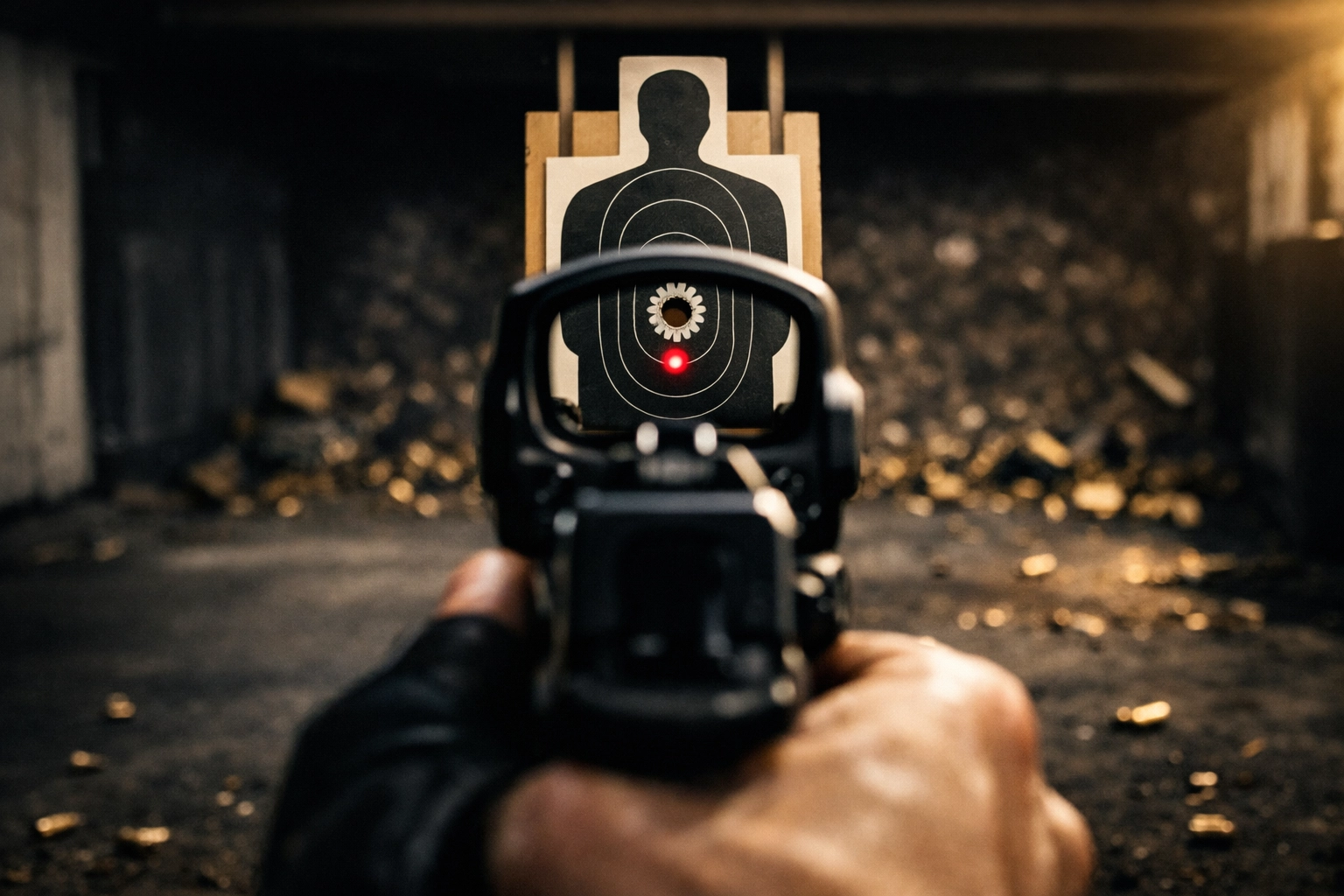
Expert shooters don’t need to look at the target to know where they hit. They "call the shot." This is a mental aspect of follow through where you visualize exactly where the sights were at the millisecond the gun fired.
If you are focused on your follow through, you will see the flash and the movement of the sights. If you saw the front sight dip low and to the right just as the gun went off, you already know you pulled the shot. This immediate feedback allows you to correct your technique in real-time without having to pause your training to walk downrange.
At our facility in Mariners Cove, 3615 Oceanside Road, Oceanside, NY, we emphasize this visual patience. Whether you are in our NYC CCW 18-hour class or a fundamentals workshop, learning to "see" the shot is the difference between guessing and knowing.
Your stance and grip (Parts 1 and 2 of this series) provide the foundation for follow through. If your stance is weak, the recoil will push you off balance, making it impossible to recover your sights quickly.
Think of your body as a shock absorber. You want the recoil to flow through you, not knock you over. By maintaining that aggressive, forward-leaning stance even after the shot, you ensure the gun returns to the same point of aim every single time.
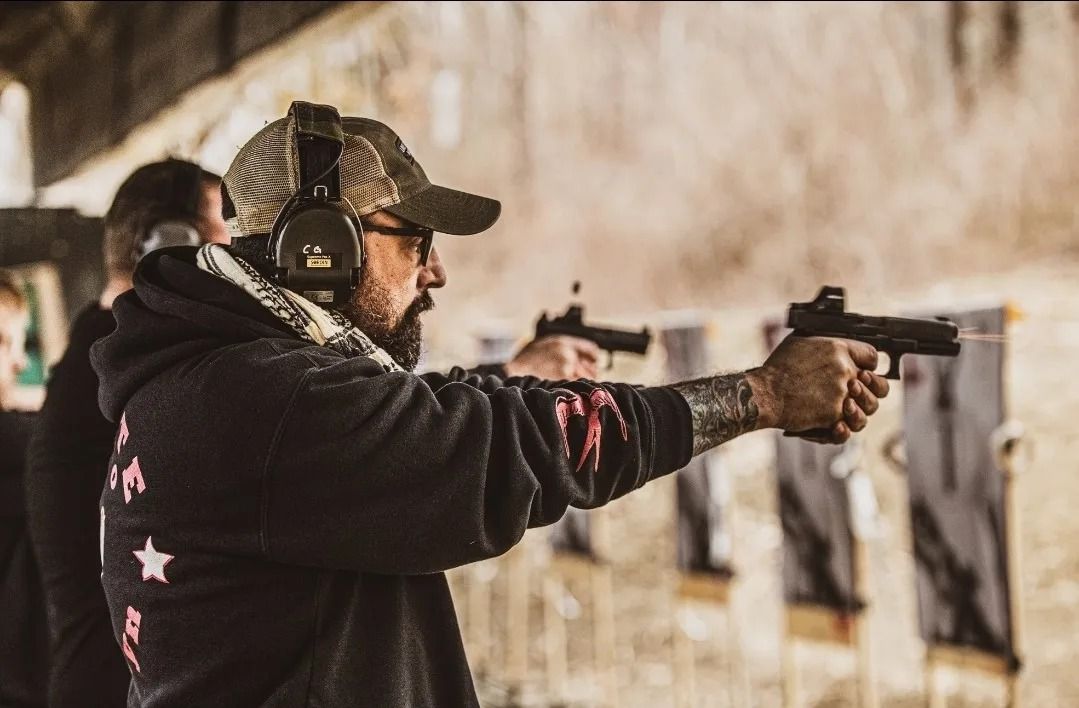
In a defensive encounter, follow through includes "scanning and breathing." Once the shots are fired and you’ve recovered your sights, you don't immediately holster. You stay in the ready position, you scan your environment for secondary threats, and you breathe to bring your heart rate down.
This is part of the comprehensive training we offer in our Citizen First Responder course. Shooting is only one part of the equation; knowing how to manage the aftermath, both tactically and medically, is what makes you truly prepared.
We’ve spent the last five weeks breaking down the core pillars of marksmanship:
None of these work in isolation. You can have the best grip in the world, but if you don't follow through, your accuracy will suffer. You can have perfect sights, but a bad stance will make follow-up shots slow and clunky.
The goal of the Shooting Simplified series was to take the "mystery" out of high-level shooting. It’s not about magic tricks or expensive gear; it’s about doing the boring fundamentals perfectly, every single time, especially when things get stressful.
Navigating the world of firearms ownership can feel like an uphill battle, especially with the complex laws in New York. You might feel overwhelmed by the technical jargon or the responsibility of carrying a concealed weapon. We get it. That’s why we’ve designed our courses to be a judgment-free zone where your confidence can soar.
Whether you are looking for NYS DCJS Pistol Qualification Coaching or you just want to spend a few hours refining your basics with Chris Goemans or Sue Cronin, we are here to provide the clear, reliable path to mastery.
Shooting is a perishable skill. Reading about follow through is a great start, but getting on the range and feeling that trigger reset under the guidance of a professional instructor is where the real growth happens.
Defend with skill, Act with confidence.*
Ready to put these fundamentals into practice?
Don't let your training stop at a blog post. Check out our upcoming courses or contact us today to schedule a one-on-one session tailored to your specific needs.
If you found this series helpful, please share it with your fellow shooters! Education is the best way to keep our community safe and proficient. Defend with skill, Act with confidence.

Well-Taught, Well-Trained
Safety always comes first. We teach proper firearm handling to help prevent accidents and encourage responsible ownership.