



Let’s be real for a second: a gunfight is just a medical emergency with a loud noise at the beginning.
Most people spend thousands of dollars on the latest sub-compact pistol, red dot sights, and custom holsters, but they carry exactly zero medical gear. Or worse, they carry a kit filled with "stuff" they saw in a YouTube video that has no business being used in a life-or-death situation.
I’ve spent over 30 years in EMS, security, and firearms training. I’ve seen what happens when people bleed out because they didn't have the right tools, and I’ve seen people fail to save a life because they were fighting their own gear.
If you are carrying a firearm for self-defense, you have a moral and practical responsibility to carry a trauma kit. But not just any kit, an Individual First Aid Kit (IFAK) that actually works when the adrenaline is dumping and your fine motor skills have left the building.
Before we get into the common mistakes, we need to address the "tactical" elephant in the room.
I hear it in almost every class: "Hey Chris, I’ll just throw a couple of tampons in my kit for gunshot wounds. They’re designed to absorb blood, right?"
Wrong.
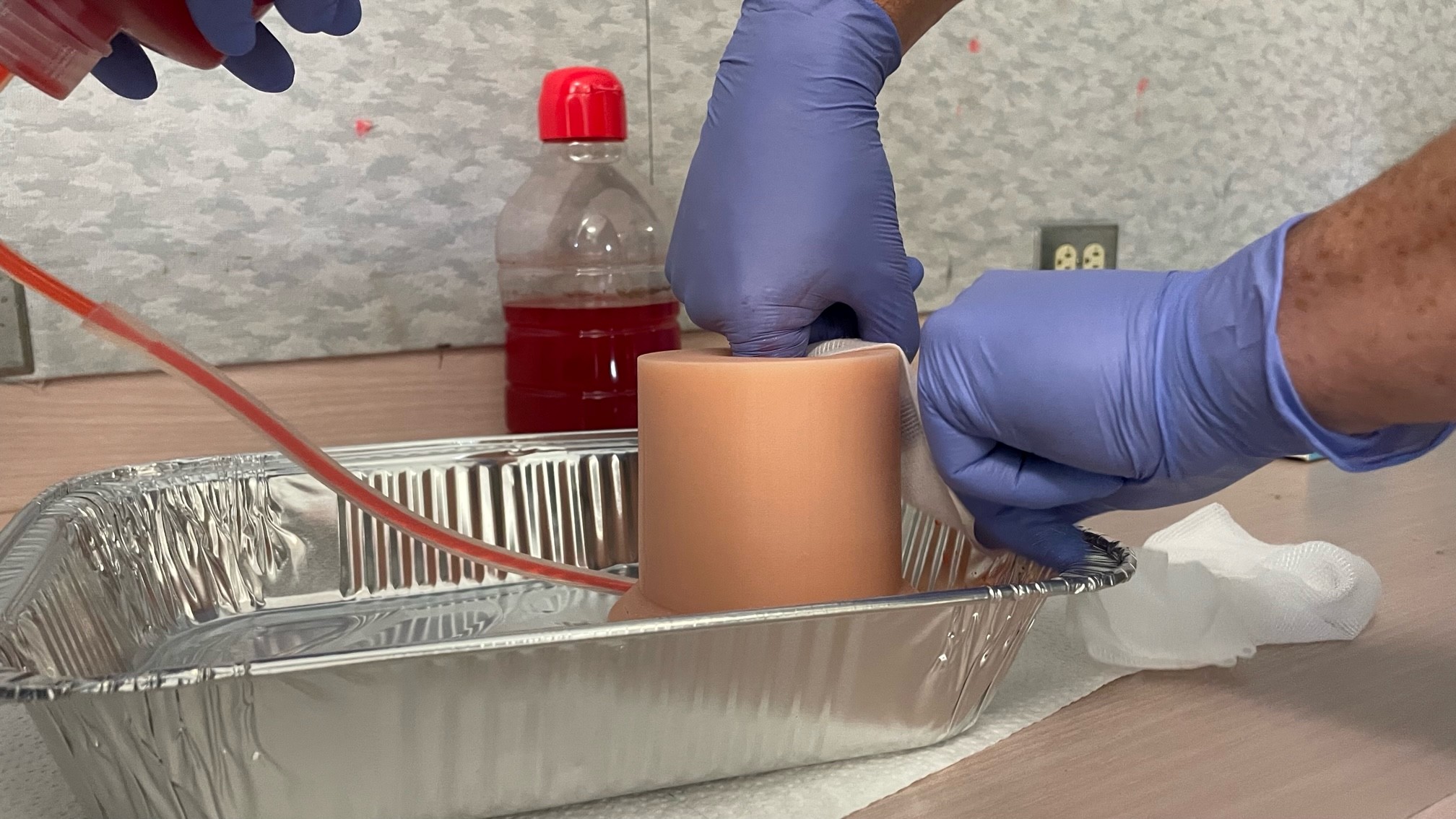
This is one of the most dangerous pieces of "bro-science" circulating in the prepper and firearms community. Tampons are designed to absorb light, surface-level menstrual flow. They are not designed to create the necessary pressure to stop a massive arterial hemorrhage. A gunshot wound is a high-pressure system. If you stick a tampon in a femoral artery bleed, you aren’t stopping the leak; you’re just making a very expensive, blood-soaked wick while the person bleeds out underneath it.
Real trauma requires wound packing with hemostatic gauze (like QuikClot) or high-quality compressed gauze, followed by direct pressure. Don't bet your life, or your friend's life, on a feminine hygiene product.
*
We all love a bargain, but your life is worth more than a $12 "tactical" tourniquet you found on a discount site.
The market is currently flooded with counterfeit North American Rescue (NAR) CAT Tourniquets. They look identical to the real thing, right down to the packaging. However, when you actually go to tighten that windlass under the pressure of a real limb, the plastic snaps.
I have seen these "fakes" fail in training environments constantly. If it fails in a air-conditioned classroom, it will definitely fail when it’s covered in blood and dirt in a parking lot. Only buy your medical gear from reputable, authorized distributors. If the price seems too good to be true, you’re buying a paperweight that might cost someone their life.
You bought a high-quality CAT or SOFTT-W tourniquet. Great. Now, for the love of everything holy, take it out of the plastic wrap.
In a massive hemorrhage situation, you have seconds, not minutes. Your heart is racing, your hands are shaking, and you might be trying to apply that tourniquet to yourself with one hand. Trying to pick apart thin, slippery plastic wrap with bloody fingers is a death sentence.
Stage your gear. Take it out of the wrap, fold it correctly for rapid deployment, and make sure it’s ready to be used instantly.

An IFAK is for trauma. It is for stopping a bleed, managing an airway, and treating a chest wound. It is not a survival kit.
I’ve seen kits where people have shoved lighters, compasses, fishing line, and water purification tablets in with their trauma shears and chest seals. When you need to get to your gauze because someone is spurting blood, you don't want to be digging through a pile of "just in case" camping gear.
Keep your medical gear separate, sterile, and organized. If you want a "boo-boo" kit for Band-Aids and ibuprofen, or a survival kit for the woods, put those in a different pouch. When the MARCH protocol (Massive Hemorrhage, Airway, Respirations, Circulation, Hypothermia) starts, you need 100% focus on the medical task at hand.
Gear does not equal skill. Owning a stethoscope doesn't make you a doctor, and owning an IFAK doesn't make you a first responder.
If you don't know how to properly pack a wound, where to place a tourniquet (high and tight vs. 2-3 inches above the wound), or how to recognize a tension pneumothorax, that kit is just a heavy accessory. You need to understand the MARCH protocol.
Training gives you the mental "software" to run the "hardware" in your pouch. You need to practice under stress. You need to know how to press a bandage to the rear with enough force to actually stop a bleed. This is exactly why we developed the Citizen First Responder Course. We take the fluff out and give you the street-tested skills to save a life.
The best medical kit in the world is useless if it’s buried at the bottom of your range bag in the trunk of your car while you’re standing at the firing line.
If you are carrying a tool that can punch holes (a firearm), you should be carrying the tools to fix those holes on your person. This is where "Carry Options" come in.
*
There are two ways to get a solid IFAK: buy a pre-made one or build your own.
Buying Pre-made:
If you’re new to this, buying a pre-made kit from a reputable company is the way to go. They’ve already done the legwork of sourcing high-quality components. I highly recommend:
Building Your Own:
As you get more experienced, you might want to "roll your own." This is what I do. It allows you to control exactly what goes in based on your training level and carry method.
What I Carry Daily:
Personally, I use an ankle kit made by Warrior Poet Society. I like it because it’s low profile, it disappears under a pair of jeans, and it’s always on me. I filled it with items I chose specifically: a CAT tourniquet, Combat Gauze, a chest seal, Emergency blanket, pressure dressing, NPA, flashlight and several pairs of high-quality gloves.

How you carry depends on your environment and your "line" of gear.
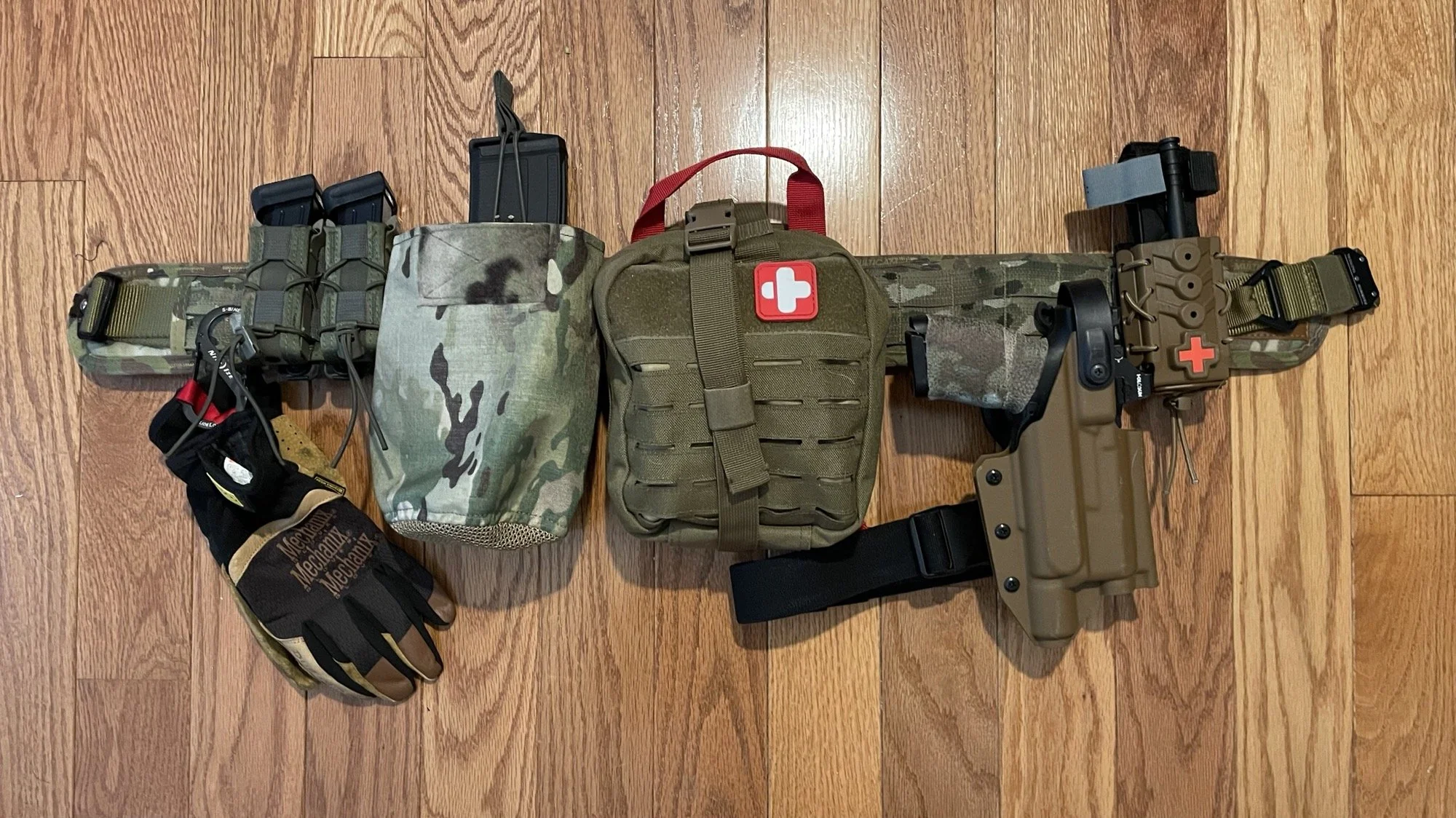
Look, reading a blog post is a great start, but it’s not a substitute for hands-on experience. At C\&G Solutions, we don't just teach you how to shoot; we teach you how to survive the entire encounter.
Our Citizen First Responder Course is designed for the average citizen who wants to be an asset, not a liability, in an emergency. We cover hemorrhage control, airway management, and the realities of trauma in a way that’s easy to understand and even easier to apply.
Special Offer:
We believe safety is a community effort. Bring a friend to any of our courses and get a $50 discount. Just make sure to mention your friend’s name in the comment section during registration to claim it.
Whether you're looking for a ny concealed carry class, a firearm safety course nyc, or you're an officer needing your HR218/LEOSA Recertification ($100.00), we have you covered.
Pricing for reference:
Call or text us to schedule.*
Don't wait until you're staring at a wound to realize you don't know what to do. Get the gear, get the training, and be the person who knows how to fix the problem.
Visit us at Mariners Cove, 3615 Oceanside Road, Oceanside, NY or check out our full list of courses at cgsolutionsusa.com/courses.
Defend with skill, Act with confidence. If you found this guide helpful, please share it with your range buddies or family members. Spreading the right information saves lives!

Well-Taught, Well-Trained
Safety always comes first. We teach proper firearm handling to help prevent accidents and encourage responsible ownership.