



You’ve spent hours at the range, practiced your draw until it’s fluid, and you’ve even mastered that clean "press to the rear" on your trigger. But there is a massive gap in many people’s safety plan: medical gear. Navigating the world of trauma kits: or Individual First Aid Kits (IFAK): can feel like an uphill battle. With so many acronyms and "tactical" labels, how do you know what actually works when the clock is ticking?
At C&G Solutions, we believe that if you are prepared to take a life in self-defense, you must be equally prepared to save one. Whether it’s a range accident, a car crash, or a violent encounter, life-threatening bleeding can kill in less than three minutes. That is faster than the best EMS response time in most cities.
Defend with skill, Act with confidence.
Let’s break down the essential components of a high-quality IFAK so you can stop guessing and start preparing.
The tourniquet is the single most important life-saving tool in your kit. If you have massive arterial bleeding on an arm or leg, a TQ is the "off switch." However, not all tourniquets are created equal. In our tactical first aid classes, we often see students show up with "Amazon specials": cheap, uncertified TQs that snap the moment you apply real pressure.
Here are the three heavy hitters you should actually consider:
The CAT is the gold standard. It’s what most LEOs and military personnel carry. It uses a windlass system (the stick you twist) to create enough pressure to stop blood flow.
The SOFTT-W is the CAT’s more rugged cousin. Instead of plastic, it uses a high-strength aluminum windlass.
This is essentially a giant, heavy-duty rubber band.
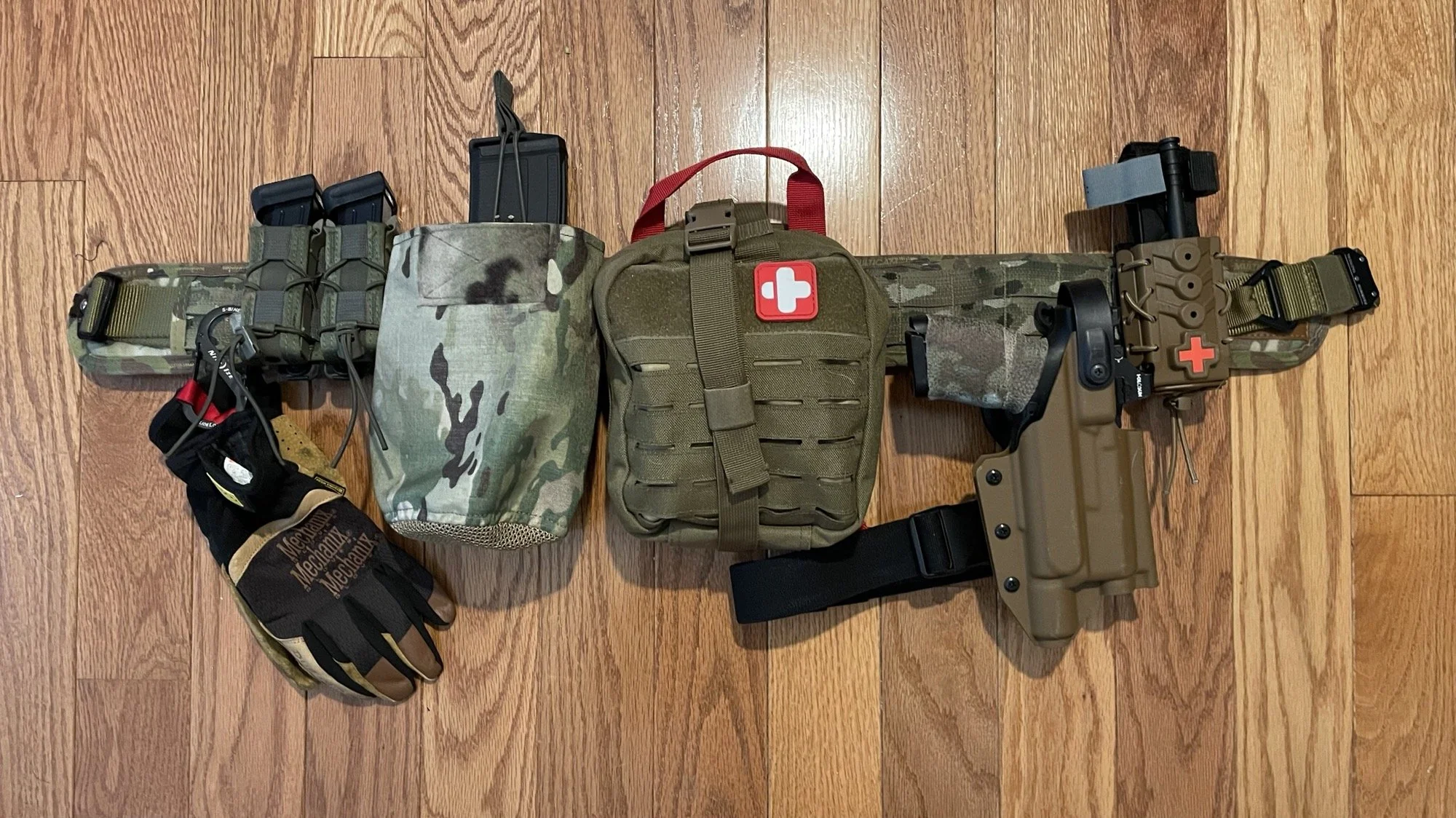
If the wound is in a "junctional" area: like the neck, armpit, or groin: a tourniquet won't work. You can’t put a TQ around someone’s neck. This is where wound packing comes in. You are literally filling the void of the wound with gauze to create internal pressure.
This is standard crinkle-cut cotton gauze. It’s cheap, takes up very little space, and gets the job done if you have the right technique. The goal is to pack the wound until it’s tight and then hold manual pressure for at least five minutes.
This is gauze treated with a chemical agent (like Kaolin or Chitosan) that helps the blood clot almost instantly.
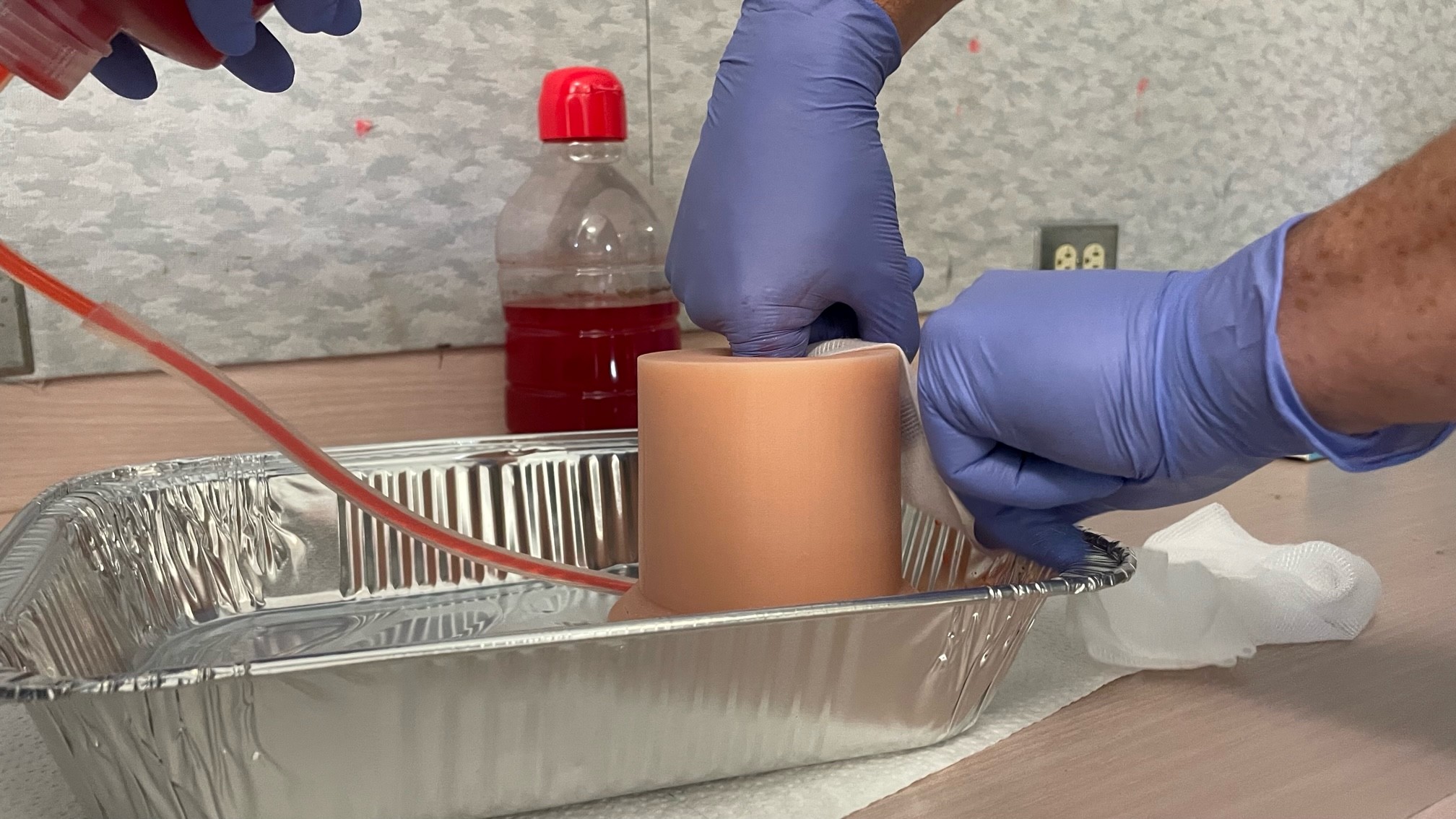
Once the wound is packed or the bleeding is slowed, you need to keep that pressure applied. This is where the pressure dressing comes in.
The "Emergency Bandage" (often called the Israeli Bandage) is famous for its "pressure bar." You wrap the bandage over the wound, loop it through the bar, and pull back in the opposite direction. This focuses all the tension directly onto the wound site. It is incredibly effective and very intuitive to use.
The North American Rescue Emergency Trauma Dressing is a simpler alternative. It’s essentially a high-quality elastic wrap with a sterile pad attached. While it lacks the mechanical leverage of the Israeli pressure bar, it is less bulky and very straightforward for beginners to apply.
A professional IFAK isn't just about the big bandages. You need the support tools that make the job possible:

Most people think that buying a "tacticool" pouch and stuffing it with medical gear makes them prepared. It doesn’t. In fact, carrying medical gear you don’t know how to use can lead to costly mistakes and legal trouble if you use it incorrectly on someone else.
My background isn't just in firearms; I spent years in EMS and security, and I’ve seen firsthand how people freeze when things get "bloody." You need to build the muscle memory to operate these tools under stress. You need to know how much pressure to apply and when to stop.
That’s why we created our Citizen First Responder course. It’s a hands-on tactical first aid class designed specifically for civilians, CCW holders, and LEOs who want to bridge the gap between "having gear" and "saving lives." We don't just talk about it; we get hands-on with trainers and simulation gear at our location in Mariners Cove, 3615 Oceanside Road, Oceanside, NY.

If you are looking for a firearm safety course NYC or NYS, don't stop at the legal requirements. The mandatory 18-hour CCW course covers the basics, but true proficiency comes from continuing education.
C&G Solutions Offerings:
Bring a Friend Discount:
Safety is a team sport. If you bring a friend to any of our courses, you get a $50 discount. Just make sure to mention your friend’s name in the comment section during registration on our website at https://www.cgsolutionsusa.com.
Building a trauma kit is a responsibility that comes with the lifestyle of being a protector. Choose high-quality components, organize them so you can reach them with either hand, and most importantly, get the training to use them.
Defend with skill, Act with confidence.
Did you find this breakdown helpful? Share this post with your range buddies or family members. Being prepared is a community effort!

Well-Taught, Well-Trained
Safety always comes first. We teach proper firearm handling to help prevent accidents and encourage responsible ownership.