



You are standing in the middle of a chaotic scene. Your heart is hammering against your ribs, your palms are sweaty, and the air feels thick. Someone is injured, and they are looking at you for help. In that split second, the "uphill battle" of managing a medical emergency begins. Without a plan, your mind will race, and your hands might freeze.
Most people think that in a trauma situation, the first thing you check is if the person is breathing. While that sounds logical, the reality of tactical medicine, based on the Committee for Tactical Emergency Casualty Care (C-TECC) guidelines, tells us something different.
If someone is losing blood at a massive rate, they can bleed to death in under three minutes. That is faster than it takes for most ambulances to even get dispatched.
At C&G Solutions, we believe that waiting for professional help shouldn't be your only option. We want you to be the help. That’s why we’ve built our training around the MARCH assessment. In this new mini-series, we are breaking down each letter of the acronym to give you a clear, reliable path through the chaos.
Today, we start with the most critical priority: M , Massive Hemorrhage.
In the traditional medical world, many are taught the "ABCs" (Airway, Breathing, Circulation). But in a trauma or tactical environment, where the injury is likely a penetrating wound or a severe limb injury, circulation, specifically massive bleeding, is the primary killer.
Think of it this way: blood is the transport system for oxygen. You can open an airway and breathe for a patient all you want, but if there is no blood left in the pipes to carry that oxygen to the brain, your efforts are futile. Identifying and stopping life-threatening external bleeding before moving to any other assessment is the foundation of modern lifesaving.
According to C-TECC guidelines for both Active Bystanders (concerned citizens who step up) and First Responders with a Duty to Act, the goal is simple: stop the leak.
Not every cut is "massive." As a responder, you need to develop the "eye" for what constitutes a life-threatening emergency. You are looking for:
When you see this, your "care under fire" or "direct threat" mindset must kick in. You have seconds to act.
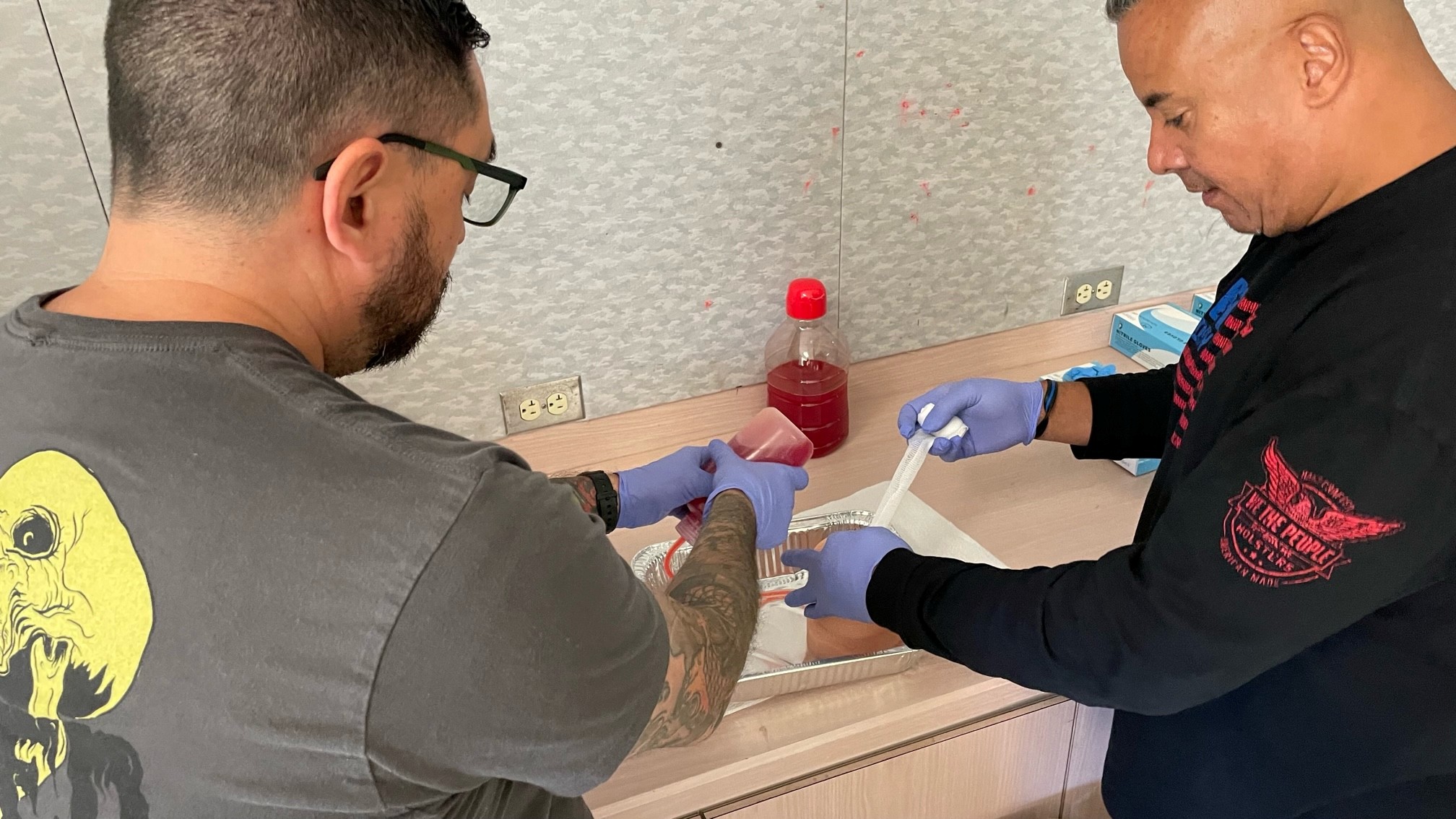
The C-TECC guidelines provide a tiered approach to stopping the bleed. Depending on your level of training and the equipment available, you have three primary ways to intervene.
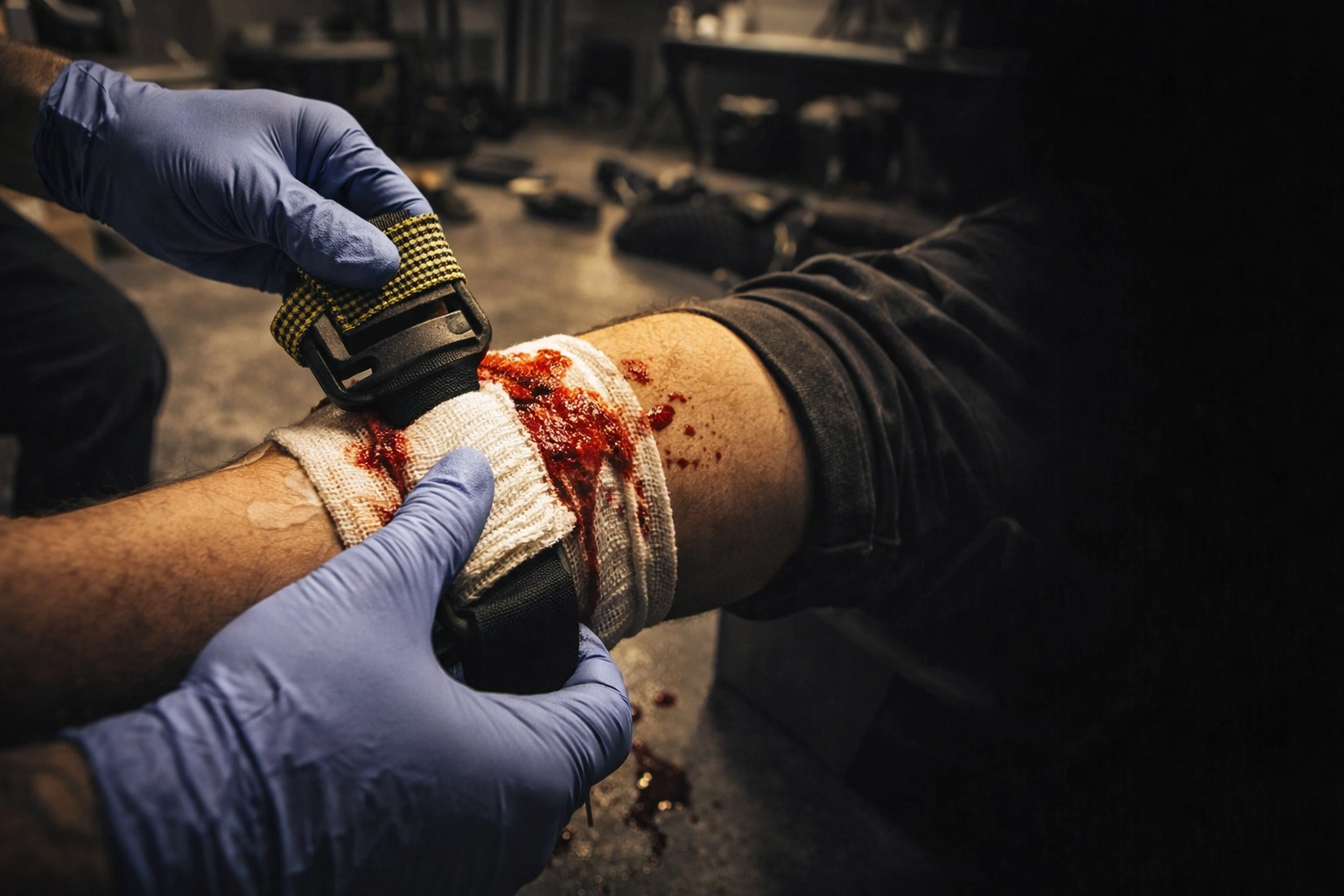
This is the most reliable method and is available to everyone, even if you don't have a medical kit. This isn't just "placing a hand" on the wound. It requires firm, targeted pressure directly over the bleeding source. You want to use your body weight to compress the vessel against the bone. If you have a clean dressing or gauze, use it, but if you don't, you use your gloved hands. You do not let go until the bleeding stops or you are replaced by a mechanical device like a tourniquet.
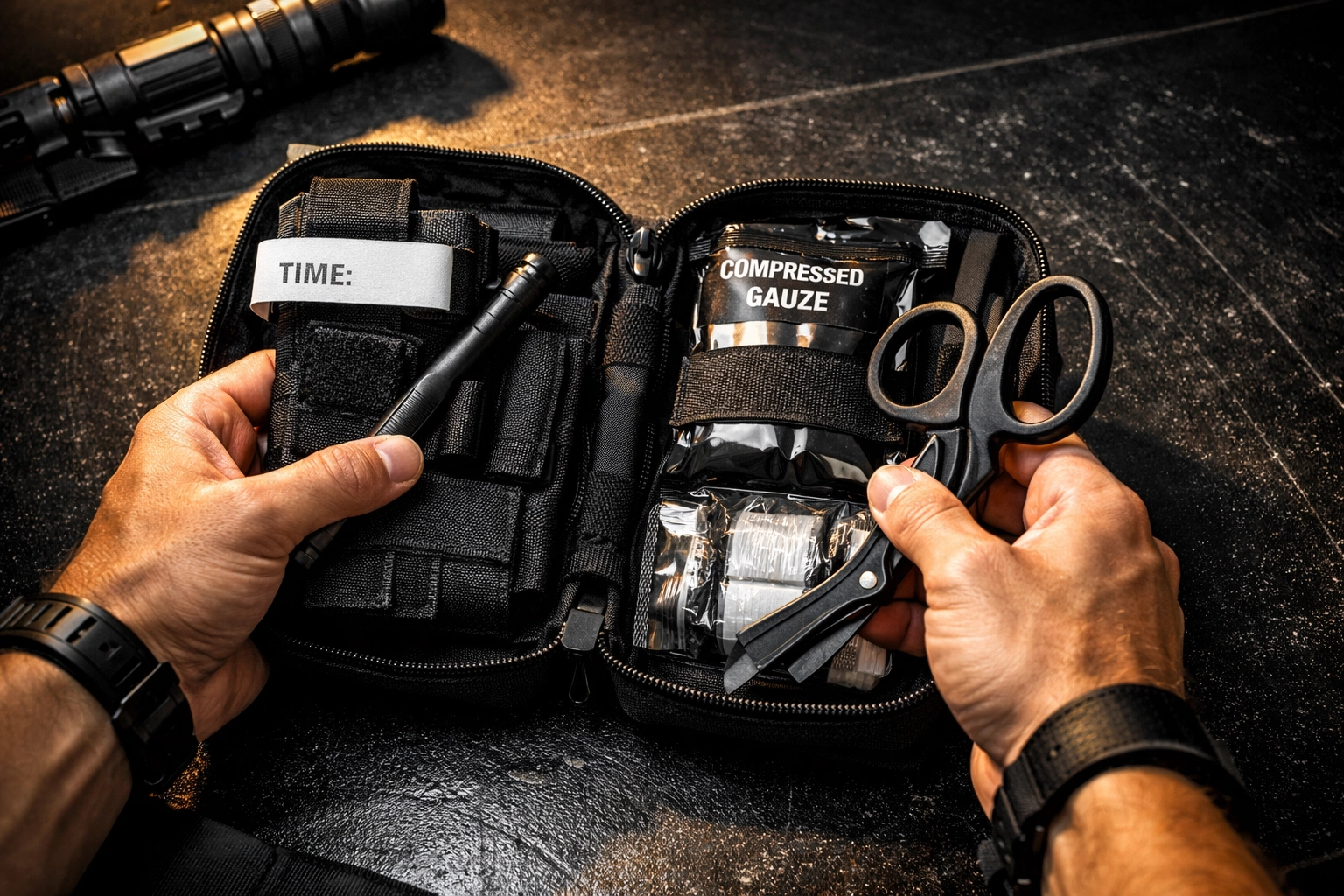
For life-threatening bleeding on an extremity (arms and legs), the tourniquet is the gold standard. For years, myths suggested that using a TQ meant the person would definitely lose the limb. We now know, through decades of data from the battlefield, that this is simply not true. A TQ applied for a few hours is a safe, life-saving intervention.
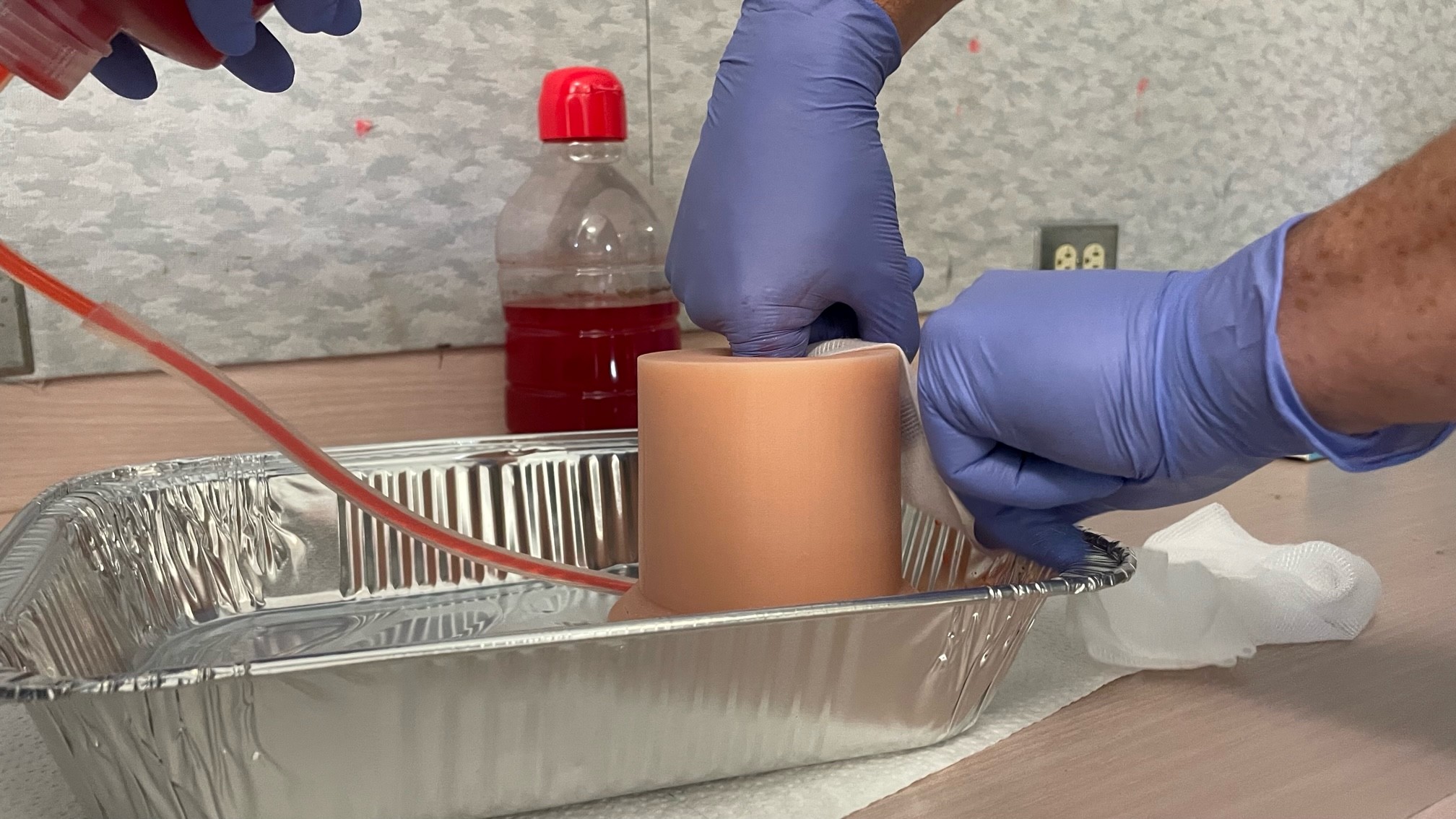
Some wounds are in "junctional" areas, the neck, the armpits, or the groin, where a tourniquet cannot be placed. In these cases, you must pack the wound. This involves aggressively stuffing gauze (ideally treated with a hemostatic agent like QuikClot) into the wound cavity and maintaining pressure for at least three minutes. If you’re building out a kit, look at reputable suppliers like North American Rescue.
There is a subtle but important distinction in how we apply these guidelines.
In our Citizen First Responder course, we follow C-TECC standards strictly. We focus on TECC fundamentals for concerned citizens/active bystanders and first responders with a duty to act, excluding advanced ALS, pediatric, or K9 protocols for this specific series to ensure you master the fundamentals first.
Reading about a tourniquet is one thing; applying one while someone is screaming and your hands are covered in (simulated) blood is another. The "legal trouble" and "costly mistakes" people fear usually stem from a lack of confidence and hands-on practice.
That is why our Citizen First Responder class is a full 8-hour day held at our facility at Mariners Cove, 3615 Oceanside Road, Oceanside, NY. We don't just sit in a classroom and look at slides. We spend the majority of the day doing practical work.
You will practice:
Most people think they will "rise to the occasion" in an emergency. The truth is, you sink to the level of your training. Our goal is to make sure your baseline level is high enough to save a life.
Whether you are a concealed carry permit holder who has taken our NYC CCW 18-hour class or an active bystander (a concerned citizen) who wants to be prepared for a car accident or workplace injury, the MARCH assessment is your roadmap.
By prioritizing "M" (Massive Hemorrhage), you are addressing the most immediate threat to life. Once the bleeding is controlled, we can move on to "A" (Airway), which we will cover in the next part of this series.
Navigating the world of tactical medicine can feel like a maze, but it doesn't have to be. With the right guidance and a commitment to practice, you can transform from a bystander into a lifesaver.
Defend with skill, Act with confidence.*
Want to get hands-on?
Don't leave your safety to chance. Join us for our next Citizen First Responder course in Oceanside. Space is limited to ensure every student gets personalized coaching from our skilled instructors.
Click here to view our upcoming course schedule and secure your spot.If you found this guide helpful, please share it with your friends and family. Increasing the number of people who know how to Stop the Bleed makes our entire community safer.

Well-Taught, Well-Trained
Safety always comes first. We teach proper firearm handling to help prevent accidents and encourage responsible ownership.